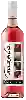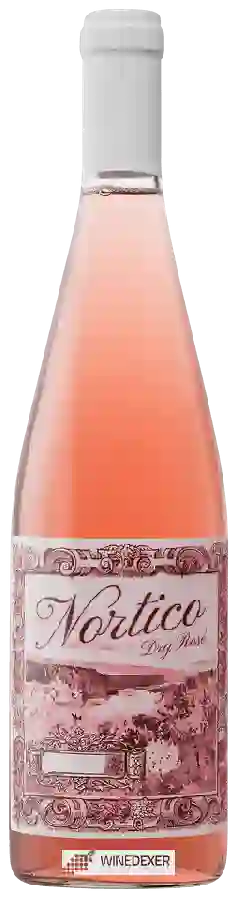
Winery NorticoDry Rose
 Pink wine


This wine generally goes well with
Wine flavors and olphactive analysis


On the nose the Dry Rose of Winery Nortico in the region of Minho often reveals types of flavors of earth, microbio or tree fruit and sometimes also flavors of citrus fruit, red fruit.
Details and technical informations about Winery Nortico's Dry Rose.
Discover the grape variety: Arbois
Arbois is a white grape variety of French origin, in Touraine. Its name comes from orboué, a local patois word. It is recommended in the departments of Indre, Indre-et-Vallée de la Loire, Loir-et-Cher, Vallée de la Loiret, Deux-Sèvres and Vienne, and is listed as a grape variety in the Touraine, Touraine Sparkling, Cheverny and Valencay AOCs. Arbois is not widely cultivated in France, covering about 650 hectares, 600 of which are in the Loir-et-Cher region. It is a vigorous variety, but moderately productive (40 to 80 hectoliters per hectare). It is part of the grape varieties used for Vouvray, Crémant de la Loire Valley, Cheverny and Valençay wines. It gives a wine with little acidity, dry, fresh and supple. It is mainly used in blending. This grape variety from the Centre region should not be confused with the vineyard and wine of Arbois, in the Jura.
Last vintages of this wine

The best vintages of Dry Rose from Winery Nortico are 2016, 2019, 2018, 0 and 2015.
Informations about the Winery Nortico
The Winery Nortico is one of of the world's greatest estates. It offers 2 wines for sale in the of Minho to come and discover on site or to buy online.

The wine region of Minho
Minho is Portugal's Northernmost wine region. It is known for one wine style above all others: crisp, light, white Vinho Verde, whose DOC zone covers the same territory. The Minho name is used for the area's Vinho Regional designation (similar to the French IGP). The latter's looser production laws allow more diversity in the average winery's portfolio, including red and rosé wines.
The word of the wine: Overmaturation
When the grapes reach maturity, the skin becomes permeable and progressively loses water, which causes a concentration phenomenon inside the berry. This is called over-ripening or passerillage.