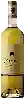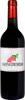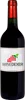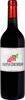
Winery Moulins de la GardeBergerac
 Red wine



This wine generally goes well with
Details and technical informations about Winery Moulins de la Garde's Bergerac.
Discover the grape variety: Cabernet-Severnyi
Interspecific crossing between (dimiat or galan x vitis amurensis) and (vitis amurensis x vinifera unknown) obtained in 1978 by the Institute of Research and Development of Viticulture and Winemaking of Novotcherkassk (Russia). It can be found in Canada (Nova Scotia, Ontario, etc.), the United States, Russia and many Eastern European countries. Note that the dimiat is a relative of the white gouais.
Informations about the Winery Moulins de la Garde
The Winery Moulins de la Garde is one of of the world's greatest estates. It offers 3 wines for sale in the of Guyenne to come and discover on site or to buy online.

The wine region of Guyenne
45 kilometres east of Bordeaux, Blasimon is perched on a hillside overlooking the Gamage, a tributary of the Dordogne. Its hilly sites and its calm make it an ideal place to relax. A Village of medieval origin, its origin reflects the traditional organization of the bastides. The city conceals one of the Romanesque jewels of the Gironde, the Benedictine abbey of the X-XIII th centuries.
The wine region of South West
The South-West is a large territorial area of France, comprising the administrative regions of Aquitaine, Limousin and Midi-Pyrénées. However, as far as the French wine area is concerned, the South-West region is a little less clear-cut, as it excludes Bordeaux - a wine region so productive that it is de facto an area in its own right. The wines of the South West have a Long and eventful history. The local rivers play a key role, as they were the main trade routes to bring wines from traditional regions such as Cahors, Bergerac, Buzet and Gaillac to their markets.
The word of the wine: Sulphur
An antiseptic and antioxidant substance known since antiquity, probably already used by the Romans. But it was only in modern times that its use was rediscovered. It will allow a better conservation of the wine and thus favour its export. Sulphur also gave the 18th century winegrower the possibility of extending the maceration period without fearing that the wine would turn sour and thus go from dark rosé wines to the red wines of today. Excessive sulphur, on the other hand, kills happiness, paralysing the aromas and causing headaches.