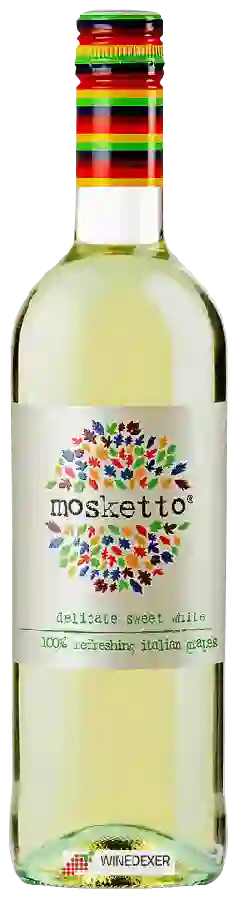
Winery MoskettoDelicate Sweet White
 Sweet wine


This wine generally goes well with sweet desserts
The Delicate Sweet White of the Winery Mosketto is in the top 10 of wines of Piedmont.

Wine flavors and olphactive analysis


On the nose the Delicate Sweet White of Winery Mosketto in the region of Piedmont often reveals types of flavors of tree fruit, citrus fruit or red fruit and sometimes also flavors of floral, tropical fruit.
Food and wine pairings with Delicate Sweet White
Pairings that work perfectly with Delicate Sweet White

Original food and wine pairings with Delicate Sweet White
The Delicate Sweet White of Winery Mosketto matches generally quite well with dishes of sweet desserts such as recipes of very simple muffins.
Details and technical informations about Winery Mosketto's Delicate Sweet White.
Discover the grape variety: Précoce Bousquet
Table grape with medium bunches and golden berries with thin skin and juicy flesh, with a sweet, fresh flavour. Very early ripening, intended mainly for fresh consumption at the start of the summer season. Grown in small quantities in southern France for fresh consumption, marking the first summer market stalls and belonging to the traditional early table grape varieties. French white table grape variety, an early mutation obtained for fresh consumption.
Last vintages of this wine
The best vintages of Delicate Sweet White from Winery Mosketto are 2017, 2016, 1991, 2015 and 2014.
Informations about the Winery Mosketto
The Winery Mosketto is one of of the world's greatest estates. It offers 5 wines for sale in the of Piedmont to come and discover on site or to buy online.

The wine region of Piedmont
Kingdom of Nebbiolo: Barolo and Barbaresco DOCG, long-ageing reds with firm tannins and lively acidity, complex aromas of withered rose, sour cherry, tar, truffle and undergrowth. More accessible, tangy Barbera on red fruit, supple, crisp Dolcetto. Sweet, floral sparkling Moscato d'Asti, mineral, lemony Gavi (Cortese) white, round, almondy Arneis from Roero. 50,000 ha across the Langhe, Roero and Monferrato, UNESCO.
The word of the wine: Tanin
A natural compound contained in the skin of the grape, the seed or the woody part of the bunch, the stalk. The maceration of red wines allows the extraction of tannins, which give the texture, the solidity and also the mellowness when the tannins are "ripe". The winemaker seeks above all to extract the tannins from the skin, the ripest and most noble. The tannins of the seed or stalk, which are "greener", especially in average years, give the wine hardness and astringency. The wines of Bordeaux (based on Cabernet and Merlot) are full of tannins, those of Burgundy much less so, with Pinot Noir containing little.





