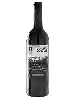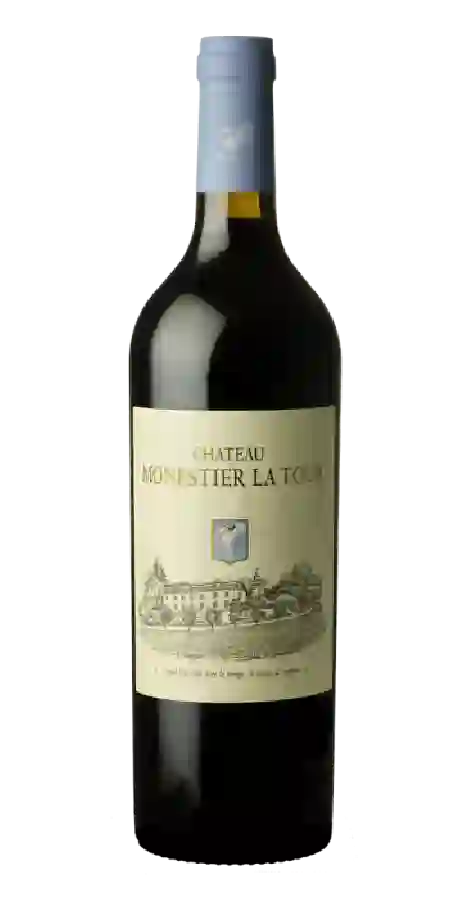
Château MontdoyenCôtes de Bergerac
 Red wine
This wine generally goes well with

Details and technical informations about Château Montdoyen's Côtes de Bergerac.
Discover the grape variety: Divico
Structured, colourful reds with a dark ruby colour, firm tannins and a dense palate showing black fruits (blackberry, cassis), spices and balsamic notes. A tannic profile suited to organic vineyards. Grown in Switzerland, France and Germany for sustainable and organic viticulture, this hybrid represents the future of eco-friendly wine-growing. Bred at Agroscope Pully in 1996, resistant to downy mildew, powdery mildew and botrytis.
Informations about the Château Montdoyen
The Château Montdoyen is one of of the world's great estates. It offers 18 wines for sale in the of Côtes de Bergerac to come and discover on site or to buy online.

The wine region of Côtes de Bergerac
Higher hierarchy of the Bergeracois in Périgord: structured complex reds — dominant Merlot blended with Cabernet Franc, Cabernet Sauvignon and Côt, deep robe, aromas of candied fruits and prune, sturdy tannins suitable for 5-10 years of aging. Sweet generous whites on Sémillon, Sauvignon and Muscadelle with notes of honey, candied fruits and apricot, round and fresh palate. Clay-limestone soils, more demanding identity than generic Bergerac.
The wine region of South West
French mosaic of strong identities south of Bordeaux. Cahors and its Malbec ("black wine"): deep reds with notes of blackberry, plum, violet, tobacco and cocoa, firm tannins. Madiran and its dense, age-worthy Tannat. Jurançon whites: golden sweet (apricot, honey, pineapple) and lively dry from Petit Manseng.
The word of the wine: Presses
The juice that results from pressing the grapes after fermentation. At the end of the maceration, the vats are emptied, the first juice obtained is called the free-run wine and the marc remaining at the bottom of the vat is then pressed to give the press wine. We say more quickly "the presses". Their quality varies according to the vintage and the maceration. A too vigorous extraction releases the tannins of pips and the wine of press can then prove to be very astringent. Often the winemaker raises it separately, deciding later whether or not to incorporate it totally or partially into the grand vin.