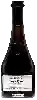
Winery Michel Tissot & FilsTradition Côtes du Jura
 Sweet wine



This wine generally goes well with
Wine flavors and olphactive analysis

Details and technical informations about Winery Michel Tissot & Fils's Tradition Côtes du Jura.
Discover the grape variety: Bertille Seyve 872
Interspecific crossing made by Bertille Seyve (1864-1944) between 85 Seibel and 2 Gaillard. This direct producing hybrid was mainly multiplied in the center of France where we found it and photographed it, but also in the departments of the Rhone valley, the Loiret valley, Isère, Vienne and Nièvre.
Last vintages of this wine
The best vintages of Tradition Côtes du Jura from Winery Michel Tissot & Fils are 2015
Informations about the Winery Michel Tissot & Fils
The Winery Michel Tissot & Fils is one of of the world's greatest estates. It offers 34 wines for sale in the of Côtes du Jura to come and discover on site or to buy online.

The wine region of Côtes du Jura
Côtes du Jura is a regional appellation in the Jura wine region of eastern France. Introduced in 1937, it is arguably the largest appellation in the region in terms of geographical extent. In terms of quantity, it is the second largest after Arbois">Arbois. While the vast majority of Jura wines are produced in the Northern half of the region between Etoile and Arbois, the Côtes du Jura catchment area extends some distance to the South.
The wine region of Jura
The Jura is a small wine region in eastern France that is responsible for some very special and traditional wine styles. It is close to the Swiss Jura, but quite distinct from it. Wedged between Burgundy to the west and Switzerland to the east, the region is characterized by a landscape of Wooded hills and the winding topography of the Jura Mountains. The Jura vineyards cover just over 1,850 hectares, forming a narrow strip of land almost 80 km Long from North to South.
The word of the wine: Flavours
There are generally four so-called fundamental flavours: acidity, bitterness, sweetness and saltiness. The first three are considered to be the building blocks of the structure of wines. They are perceived by the taste buds that cover the surface of the tongue.