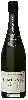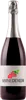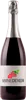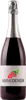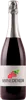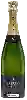
Winery Le MesnilBlanc de Blancs Brut Demi-Sec Champagne Grand Cru
 Sparkling wine
This wine generally goes well with pork, rich fish (salmon, tuna etc) or shellfish.

Food and wine pairings with Blanc de Blancs Brut Demi-Sec Champagne Grand Cru
Pairings that work perfectly with Blanc de Blancs Brut Demi-Sec Champagne Grand Cru



Original food and wine pairings with Blanc de Blancs Brut Demi-Sec Champagne Grand Cru

The Blanc de Blancs Brut Demi-Sec Champagne Grand Cru of Winery Le Mesnil matches generally quite well with dishes of pork, rich fish (salmon, tuna etc) or shellfish such as recipes of quiche with mixed vegetables, toasted bagel with smoked salmon or penne with shrimp and zucchini.
Details and technical informations about Winery Le Mesnil's Blanc de Blancs Brut Demi-Sec Champagne Grand Cru.
Discover the grape variety: Chardonnay
Whites with many faces: mineral and taut at Chablis (lemon, green apple, flint), opulent and buttery at Meursault and Puligny-Montrachet (hazelnut, brioche, yellow fruits), tense and chalky in Champagne (Blanc de Blancs). Also vinified sparkling and widely exported (Sonoma, Margaret River, Casablanca). A Burgundian variety, a cross of Pinot Noir × Gouais Blanc, half-sibling of Aligoté.
Informations about the Winery Le Mesnil
The Winery Le Mesnil is one of of the world's great estates. It offers 19 wines for sale in the of Champagne Grand Cru to come and discover on site or to buy online.

The wine region of Champagne Grand Cru
Elite of Champagne: 17 villages rated 100% on the cru scale (1919), only 5% of the 319 communes. Exceptional bubbles with signature notes of brioche, toasted hazelnut, honey, candied citrus, russet apple and chalky minerality, a chiselled finish. Cote des Blancs (Avize, Cramant, Mesnil) sublimates taut, saline Chardonnay. Montagne de Reims (Ambonnay, Bouzy, Verzenay) magnifies fleshy, deep Pinot Noir.
The wine region of Champagne
World benchmark sparkling wines: fine bubbles, citrusy tension, notes of brioche, toasted almond, white flowers and white-fleshed fruits after ageing on lees. Three grapes blended or solo: fleshy Pinot Noir (38%), fruity Meunier (33%), chiselled Chardonnay (28%). From straight Blanc de Blancs to vinous Blanc de Noirs, from non-vintage Brut to age-worthy Millésimé. AOC since 1927, 34,300 ha on chalk, 17 Grands Crus and 44 Premiers Crus.
The word of the wine: Performance
Quantity of grapes harvested per hectare. In AOC, the average yield is limited on the proposal of the appellation syndicate, validated by the Inao. The use of high-performance plant material (especially clones) and better control of vine diseases have increased yields. This is not without consequences on the quality of the wines (dilution) and on the state of the market (too much wine). We must not over-simplify: low yields are not synonymous with quality, and it is often in years with generous harvests that we find the greatest vintages (1982 and 1986 in Bordeaux, 1996 in Champagne, 1990 and 2005 in Burgundy...).