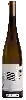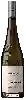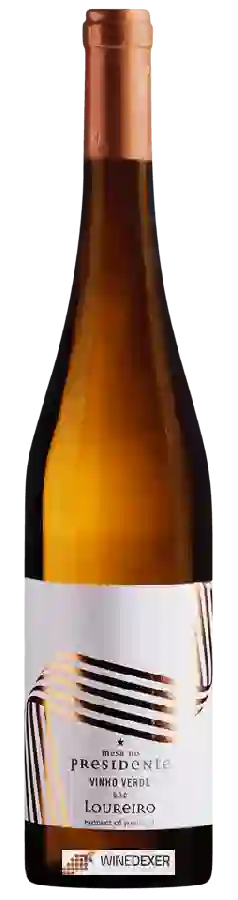
Winery Mesa do PresidenteLoureiro
 White wine



This wine is composed of 100% of the grape variety Loureiro.
In the mouth this white wine is a with a nice freshness.
This wine generally goes well with vegetarian, appetizers and snacks or shellfish.
Taste structure of the Loureiro from the Winery Mesa do Presidente
Light | Bold | |
Dry | Sweet | |
Soft | Acidic |
In the mouth the Loureiro of Winery Mesa do Presidente in the region of Minho is a with a nice freshness.
Food and wine pairings with Loureiro
Pairings that work perfectly with Loureiro



Original food and wine pairings with Loureiro
The Loureiro of Winery Mesa do Presidente matches generally quite well with dishes of shellfish, vegetarian or appetizers and snacks such as recipes of shrimp curry and coconut (thailand), zucchini and goat cheese quiche or patatas bravas (fried potatoes with spicy tomato sauce).
Details and technical informations about Winery Mesa do Presidente's Loureiro.
Discover the grape variety: Loureiro
Most certainly Portuguese. Loureiro is part of the grape varieties of many Spanish and Portuguese appellations, including the famous Vinho Verde. It would be a close relative of the albarino and the sousão.
Last vintages of this wine
The best vintages of Loureiro from Winery Mesa do Presidente are 2017, 2016, 0, 2018
Informations about the Winery Mesa do Presidente
The Winery Mesa do Presidente is one of of the world's greatest estates. It offers 8 wines for sale in the of Vinho Verde to come and discover on site or to buy online.

The wine region of Vinho Verde
The wine region of Vinho Verde is located in the region of Minho of Portugal. We currently count 535 estates and châteaux in the of Vinho Verde, producing 1615 different wines in conventional, organic and biodynamic agriculture. The wines of Vinho Verde go well with generally quite well with dishes .
The wine region of Minho
Minho is Portugal's Northernmost wine region. It is known for one wine style above all others: crisp, light, white Vinho Verde, whose DOC zone covers the same territory. The Minho name is used for the area's Vinho Regional designation (similar to the French IGP). The latter's looser production laws allow more diversity in the average winery's portfolio, including red and rosé wines.
The word of the wine: Dense
Rich and concentrated wine with tight tannins and a consistent body.