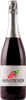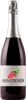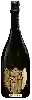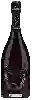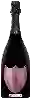
Winery Mary SessileChampagne Rubis Rosé Brut
 Sparkling wine



In the mouth this sparkling wine is a powerful with a nice vivacity and a fine and pleasant bubble.
This wine generally goes well with pork, rich fish (salmon, tuna etc) or shellfish.

Taste structure of the Champagne Rubis Rosé Brut from the Winery Mary Sessile
Light | Bold | |
Soft | Acidic | |
Gentle | Fizzy |
In the mouth the Champagne Rubis Rosé Brut of Winery Mary Sessile in the region of Champagne is a powerful with a nice vivacity and a fine and pleasant bubble.
Food and wine pairings with Champagne Rubis Rosé Brut
Pairings that work perfectly with Champagne Rubis Rosé Brut



Original food and wine pairings with Champagne Rubis Rosé Brut

The Champagne Rubis Rosé Brut of Winery Mary Sessile matches generally quite well with dishes of pork, rich fish (salmon, tuna etc) or shellfish such as recipes of tripe in the style of caen, tuna brick (light) or rice with shrimps and onions.
Details and technical informations about Winery Mary Sessile's Champagne Rubis Rosé Brut.
Discover the grape variety: Perlette
Seedless table grape with long clusters and golden berries, thin skin and crisp flesh, sweet fresh taste. Early-ripening and productive. Grown in California, Mexico, Argentina and Chile for export markets, valued for its attractive appearance and excellent shelf life. White seedless American variety obtained in 1936 in California, widely distributed in supermarkets.
Informations about the Winery Mary Sessile
The Winery Mary Sessile is one of of the world's greatest estates. It offers 6 wines for sale in the of Champagne to come and discover on site or to buy online.

The wine region of Champagne
World benchmark sparkling wines: fine bubbles, citrusy tension, notes of brioche, toasted almond, white flowers and white-fleshed fruits after ageing on lees. Three grapes blended or solo: fleshy Pinot Noir (38%), fruity Meunier (33%), chiselled Chardonnay (28%). From straight Blanc de Blancs to vinous Blanc de Noirs, from non-vintage Brut to age-worthy Millésimé. AOC since 1927, 34,300 ha on chalk, 17 Grands Crus and 44 Premiers Crus.
The word of the wine: Tertiary aromas
Aromas resulting from the aging of the wine in the bottle. The aromas evolve with time, from fresh fruitiness to notes of stewed, candied or dried fruit, to aromas of venison or undergrowth.