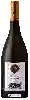
Winery Lomas CampesinasNinhue País
 Red wine
This wine generally goes well with
Details and technical informations about Winery Lomas Campesinas's Ninhue País.
Discover the grape variety: Bouysselet
Resulting from a natural intraspecific crossing between the Savagnin and the Cauzette plant, the latter being close to the Tannat. It should be noted that it has very often been confused with the Saint Côme, it is true that we have noted some points of resemblance. Bouysselet is very old in the Haute Garonne, more precisely in Villaudric, where it almost disappeared, but has now been replanted to the great satisfaction of connoisseurs. It is registered in the Official Catalogue of wine grape varieties, list A1.
Informations about the Winery Lomas Campesinas
The Winery Lomas Campesinas is one of of the world's great estates. It offers 8 wines for sale in the of Central Valley to come and discover on site or to buy online.

The wine region of Central Valley
The Central Valley (El Valle Central) of Chile is one of the most important wine-producing areas in South America in terms of Volume. It is also one of the largest wine regions, stretching from the Maipo Valley (just south of Santiago) to the southern end of the Maule Valley. This is a distance of almost 250 miles (400km) and covers a number of Climate types. The Central Valley wine region is easily (and often) confused with the geological Central Valley, which runs north–south for more than 620 miles (1000km) between the Pacific Coastal Ranges and the lower Andes.
The word of the wine: Petiole
Stem of the leaf, connecting the leaf blade to the stem.