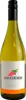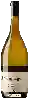
Domaine des LiardsMontlouis-Sur-Loire Sec
 Red wine


This wine generally goes well with
Details and technical informations about Domaine des Liards's Montlouis-Sur-Loire Sec.
Discover the grape variety: Gros Colman
From the South Caucasus, perhaps in Georgia, some writings give it as coming from Russia, a country close to the previous one. For a long time, it was grown in greenhouses, particularly in Belgium, but also in England, France, Holland and Japan. It was rarely cultivated in the field, but a few attempts were made without much success on the banks of the Rhine, in the Tarn et Garonne region and in Thomery in the Seine et Marne region. Today, it is no longer multiplied in nurseries and is therefore in danger of extinction. It is thought to be the result of a natural intraspecific cross between white tigvoasa or furjmony feher - a Romanian variety with female flowers - and black kadarka. There is a clone that takes on a very characteristic purple color in the fall, with larger berries, larger bunches and later ripening.
Informations about the Domaine des Liards
The Domaine des Liards is one of of the world's greatest estates. It offers 8 wines for sale in the of Touraine to come and discover on site or to buy online.

The wine region of Touraine
The wine region of Touraine is located in the region of Centre Loire of Loire Valley of France. Wineries and vineyards like the Domaine Famille Bougrier or the Domaine Joel Delaunay produce mainly wines white, red and sparkling. The most planted grape varieties in the region of Touraine are Cabernet franc, Gamay noir and Chenin blanc, they are then used in wines in blends or as a single variety. On the nose of Touraine often reveals types of flavors of grapefruit, tar or kiwi and sometimes also flavors of lime zest, lychee or asparagus.
The wine region of Loire Valley
The Loire Valley is a key wine region in western France. It follows the course of the Loire River on its Long journey through the heart of France, from the inland hills of the Auvergne to the plains of the French Atlantic coast near Nantes (Muscadet country). Important in terms of quantity and quality, the region produces large quantities (about 4 million h/l each year) of everyday wines, as well as some of France's greatest wines. Diversity is another of the region's major assets; the styles of wine produced here range from the light, tangy Muscadet to the Sweet, honeyed Bonnezeaux, the Sparkling whites of Vouvray and the juicy, Tannic reds of Chinon and Saumur.
The word of the wine: Green harvest or green harvesting
The practice of removing excess bunches of grapes from certain vines, usually in July, but sometimes later. This is often necessary, but not always a good thing, as the remaining grapes tend to gain weight.