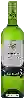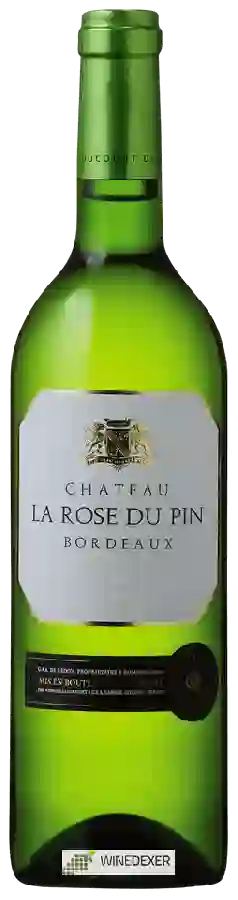
Château La Rose du PinBordeaux Blanc
 White wine



In the mouth this white wine is a powerful.
This wine generally goes well with pork, vegetarian or poultry.

Taste structure of the Bordeaux Blanc from the Château La Rose du Pin
Light | Bold | |
Dry | Sweet | |
Soft | Acidic |
In the mouth the Bordeaux Blanc of Château La Rose du Pin in the region of Bordeaux is a powerful.
Food and wine pairings with Bordeaux Blanc
Pairings that work perfectly with Bordeaux Blanc



Original food and wine pairings with Bordeaux Blanc


The Bordeaux Blanc of Château La Rose du Pin matches generally quite well with dishes of pork, vegetarian or poultry such as recipes of wild boar stew, light tuna-tomato quiche (without cream) or eggs florentine.
Details and technical informations about Château La Rose du Pin's Bordeaux Blanc.
Discover the grape variety: Valdiguié
Supple and fruity reds with a clear ruby robe, melted tannins and fresh acidity, with aromas of red fruits (raspberry, cherry, strawberry), soft spices and floral notes. A light, thirst-quenching style, best drunk young, often by carbonic maceration. Grown in California as "Napa Gamay" and in Languedoc IGPs. An autochthonous south-west variety once ubiquitous in France, now in revival for modern cuvées.
Last vintages of this wine
The best vintages of Bordeaux Blanc from Château La Rose du Pin are 2011
Informations about the Château La Rose du Pin
The Château La Rose du Pin is one of of the world's greatest estates. It offers 6 wines for sale in the of Bordeaux to come and discover on site or to buy online.

The wine region of Bordeaux
World-renowned age-worthy reds, led by round Merlot (plum, black fruit) or firm Cabernet Sauvignon (blackcurrant, cedar, graphite), blended with Cabernet Franc and Petit Verdot for tannic structure. Structured Médoc and Graves, velvety Saint-Émilion and Pomerol. Also crisp dry whites (Sauvignon/Sémillon) and opulent sweet Sauternes with honey and candied fruit. A 110,000 ha Gironde vineyard, 65 appellations, cradle of the 1855 classified growths.
The word of the wine: Melchior
Bottle with a capacity of 18 litres.