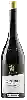
Winery Josef BriglLagrein
 Red wine


In the mouth this red wine is a powerful.
This wine generally goes well with beef, game (deer, venison) or lamb.
Taste structure of the Lagrein from the Winery Josef Brigl
Light | Bold | |
Smooth | Tannic | |
Dry | Sweet | |
Soft | Acidic |
In the mouth the Lagrein of Winery Josef Brigl in the region of Trentino-Alto-Adige is a powerful.
Food and wine pairings with Lagrein
Pairings that work perfectly with Lagrein



Original food and wine pairings with Lagrein

The Lagrein of Winery Josef Brigl matches generally quite well with dishes of beef, pasta or lamb such as recipes of beef stew provencal style, spaghetti neapolitan style or moroccan lamb stew.
Details and technical informations about Winery Josef Brigl's Lagrein.
Discover the grape variety: Cal 6-04
Interspecific crossing obtained in Switzerland by Valentin Blattner between Riesling x Sauvignon Blanc and a variety whose name has not yet been communicated and which is resistant to the main cryptogamic diseases. VB Cal 6-04 can be found in Switzerland, Belgium, Germany, etc. In France, a few plantations have been carried out and it is registered in the Official Catalogue of wine grape varieties under the name Sauvignac liste A.
Last vintages of this wine

The best vintages of Lagrein from Winery Josef Brigl are 2013, 0, 2012, 2011
Informations about the Winery Josef Brigl
The Winery Josef Brigl is one of of the world's great estates. It offers 53 wines for sale in the of Trentino-Alto-Adige to come and discover on site or to buy online.

The wine region of Trentino-Alto-Adige
Trentino-Alto Adige is Italy's northernmost wine region, located right on the border with Austria. Production was once dominated by the local red varieties Lagrein and Schiava. Now white wines are becoming more important in terms of Volume. Increasingly, they are made from internationally renowned Grape varieties such as Pinot Grigio and Chardonnay.
The word of the wine: Astringency
Chemical stimulation that tightens the mucous membranes of the mouth and causes a sensation of harshness, which is characteristic of the presence of tannins. With time, the tannins lose their harshness and become softer.