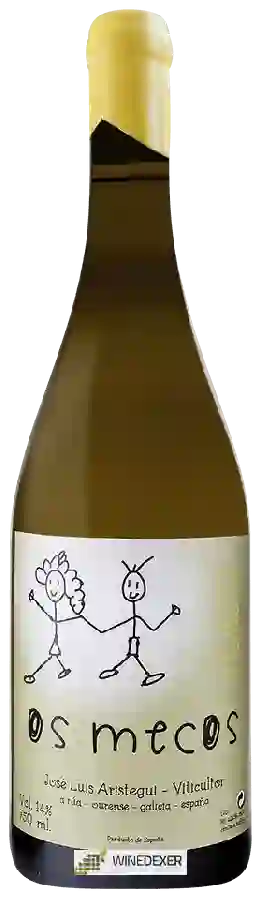
Winery Jose Luis AristeguiOs Mecos Hollejos
 White wine



This wine generally goes well with
The Os Mecos Hollejos of the Winery Jose Luis Aristegui is in the top 70 of wines of Valdeorras.
Details and technical informations about Winery Jose Luis Aristegui's Os Mecos Hollejos.
Discover the grape variety: Amigne
A very old vine cultivated in the Swiss Valais, more precisely in Vétroz. The latest genetic analyses, to be confirmed however, show that it would be related to the petit meslier and in fact to the gouais and the savagnin. It should be noted that it is only known in its country and region of origin.
Last vintages of this wine
The best vintages of Os Mecos Hollejos from Winery Jose Luis Aristegui are 2015, 0
Informations about the Winery Jose Luis Aristegui
The Winery Jose Luis Aristegui is one of of the world's greatest estates. It offers 6 wines for sale in the of Valdeorras to come and discover on site or to buy online.

The wine region of Valdeorras
The wine region of Valdeorras is located in the region of Galice of Spain. Wineries and vineyards like the Domaine Rafael Palacios or the Domaine Rafael Palacios produce mainly wines white, red and sweet. The most planted grape varieties in the region of Valdeorras are Mencia, Albarino and Trousseau, they are then used in wines in blends or as a single variety. On the nose of Valdeorras often reveals types of flavors of pineapple, mango or slate and sometimes also flavors of black fruit, red fruit or watermelon.
The wine region of Galice
Galicia is one of the 17 first-level administrative regions (called comunidades autónomas) of Spain. It occupies the northwestern corner of the Iberian Peninsula, and is exposed on two sides to the Atlantic Ocean. To the South is Portugal, to the east Castilla y Leon. Viticulture has a Long tradition in Galicia, introduced to the region by the ancient Romans and continued by monks throughout the Middle Ages.
The word of the wine: Size
Cutting of shoots to regulate and balance the growth of the vine in order to control productivity.