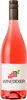
Winery Johann TulliusBacchus Lieblich
 wine
wine
This wine generally goes well with
The Bacchus Lieblich of the Winery Johann Tullius is in the top 0 of wines of Nahe.
Details and technical informations about Winery Johann Tullius's Bacchus Lieblich.
Discover the grape variety: Poulsard
Poulsard is a red grape variety that originated in the Franche-Comté region. In 1732, it was qualified as a good grape variety with several others by the parliament of Besançon at the time. It currently covers nearly 300 ha. This variety has 3 approved clones: 296, 584 and 464. Poulsard has slightly hairy branches with long tendrils. Its leaves are yellow in color. Although its bunches are small, its berries are often medium-sized or larger. Poulsard is quite sensitive to scorching, spring frosts and coulure. It is also afraid of oidium, mildew and grey rot. This grape variety appreciates clayey, fat and marly soils. Its fertility is average, so it is preferable to prune it long. It buds quite early. Poulsard produces a wine with a light structure, fine and aromatic. It can be kept for years. This wine goes well with poultry, red meat, cheese and starters.
Informations about the Winery Johann Tullius
The Winery Johann Tullius is one of of the world's greatest estates. It offers 20 wines for sale in the of Nahe to come and discover on site or to buy online.

The wine region of Nahe
Nahe is one of the smaller German wine regions, named after the Nahe river which joins the Rhein at Rheinhessen/bingen">Bingen. The viticultural carea here is characterised by dramatic topography with steep slopes and craggy outcrops of metamorphic rock. Like most of the regions on or near the Rhine, its most prestigious wines are made from Riesling. There are around 4,000 hectares (10,000 acres) of Vineyards, spread across seven Grosslagen (wine districts) and over 300 Einzellagen (individual vineyard sites).
The word of the wine: Chaptalization
The addition of sugar at the time of fermentation of the must, an ancient practice, but theorized by Jean-Antoine Chaptal at the dawn of the 19th century. The sugar is transformed into alcohol and allows the natural degree of the wine to be raised in a weak or cold year, or - more questionably - when the winegrower has a harvest that is too large to obtain good maturity.