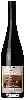
Winery Jéròme Lorentz FilsPinot Noir Vin d'Alsace Reserve
 Red wine



In the mouth this red wine is a .
This wine generally goes well with poultry, veal or game (deer, venison).
Taste structure of the Pinot Noir Vin d'Alsace Reserve from the Winery Jéròme Lorentz Fils
Light | Bold | |
Smooth | Tannic | |
Dry | Sweet | |
Soft | Acidic |
In the mouth the Pinot Noir Vin d'Alsace Reserve of Winery Jéròme Lorentz Fils in the region of Alsace is a .
Food and wine pairings with Pinot Noir Vin d'Alsace Reserve
Pairings that work perfectly with Pinot Noir Vin d'Alsace Reserve



Original food and wine pairings with Pinot Noir Vin d'Alsace Reserve

The Pinot Noir Vin d'Alsace Reserve of Winery Jéròme Lorentz Fils matches generally quite well with dishes of veal, game (deer, venison) or poultry such as recipes of osso-bucco with asian flavours, funambuline style, wild boar stew or chicken curry with coconut milk and cashew nuts.
Details and technical informations about Winery Jéròme Lorentz Fils's Pinot Noir Vin d'Alsace Reserve.
Discover the grape variety: Pinot noir
Pinot noir is an important red grape variety in Burgundy and Champagne, and its reputation is well known! Great wines such as the Domaine de la Romanée Conti elaborate their wines from this famous grape variety, and make it a great variety. When properly vinified, pinot noit produces red wines of great finesse, with a wide range of aromas depending on its advancement (fruit, undergrowth, leather). it is also the only red grape variety authorized in Alsace. Pinot Noir is not easily cultivated beyond our borders, although it has enjoyed some success in Oregon, the United States, Australia and New Zealand.
Informations about the Winery Jéròme Lorentz Fils
The Winery Jéròme Lorentz Fils is one of of the world's greatest estates. It offers 8 wines for sale in the of Alsace to come and discover on site or to buy online.

The wine region of Alsace
Alsace, located in the extreme north-east of France, is Distinguished from other French wine regions by its strong Franco-Germanic influences. These influences are the result of a back-and-forth between the German and French sovereignties over the last few centuries. They can be seen not only in the architecture and culture of Alsace, but also in the wines. Alsace wines are produced under three main appellations: Alsace and Alsace Grand Cru for still white wines (Sweet and Dry), and Crémant d'Alsace for Sparkling wines.
The word of the wine: Shipping (liquor)
In champagne and wines made according to the traditional method, wine is added before corking to fill the void in the bottle created by disgorging. This added wine is often sweetened by sugar incorporated in variable proportions according to the style of wine sought (see dosage). Syn.: liqueur de dosage.