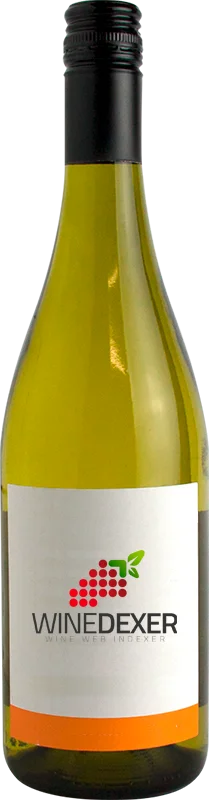
Winery Jean Paul DavidRenaissance Sauvignon
 White wine
This wine generally goes well with vegetarian, rich fish (salmon, tuna etc) or shellfish.
Food and wine pairings with Renaissance Sauvignon
Pairings that work perfectly with Renaissance Sauvignon



Original food and wine pairings with Renaissance Sauvignon
The Renaissance Sauvignon of Winery Jean Paul David matches generally quite well with dishes of rich fish (salmon, tuna etc), shellfish or vegetarian such as recipes of gratin of ravioli with salmon, lamb with okra sauce or ham and comté quiche.
Details and technical informations about Winery Jean Paul David's Renaissance Sauvignon.
Discover the grape variety: Muscaris
An interspecific cross between Solaris and Muscat à petits grains blancs, obtained in Freiburg (Germany) in 1987 by Norbert Becker. It has the particularity of having only one gene for resistance to mildew and powdery mildew. Muscaris can be found in Germany, the Netherlands, Italy and France.
Informations about the Winery Jean Paul David
The Winery Jean Paul David is one of of the world's greatest estates. It offers 17 wines for sale in the of Loire Valley to come and discover on site or to buy online.

The wine region of Loire Valley
The Loire Valley is a key wine region in western France. It follows the course of the Loire River on its Long journey through the heart of France, from the inland hills of the Auvergne to the plains of the French Atlantic coast near Nantes (Muscadet country). Important in terms of quantity and quality, the region produces large quantities (about 4 million h/l each year) of everyday wines, as well as some of France's greatest wines. Diversity is another of the region's major assets; the styles of wine produced here range from the light, tangy Muscadet to the Sweet, honeyed Bonnezeaux, the Sparkling whites of Vouvray and the juicy, Tannic reds of Chinon and Saumur.
The word of the wine: Terroir
Strictly speaking, the notion of terroir corresponds to the geological characteristics of a vineyard. However, when we talk about terroir, we take into account the soil, the climate (even the microclimate), the flora, the fauna, and the human factor that characterizes the practices that make up the art of the craft.