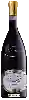
Winery MalavasiBacio Rosa
 wine
wine
This wine generally goes well with
The Bacio Rosa of the Winery Malavasi is in the top 0 of wines of Garda.
Details and technical informations about Winery Malavasi's Bacio Rosa.
Discover the grape variety: Béni carlo
This grape variety is widely cultivated in Spain under the name béni carlo. It was introduced into the Languedoc-Roussillon region of Narbonne around 1870.
Informations about the Winery Malavasi
The Winery Malavasi is one of of the world's great estates. It offers 17 wines for sale in the of Garda to come and discover on site or to buy online.

The wine region of Garda
The wine region of Garda is located in the region of Vénétie of Italy. Wineries and vineyards like the Domaine Franzosi or the Domaine Roveglia produce mainly wines red, white and pink. The most planted grape varieties in the region of Garda are Marzemino, Sangiovese and Merlot, they are then used in wines in blends or as a single variety. On the nose of Garda often reveals types of flavors of apples, apricot or red fruit and sometimes also flavors of black fruit, blueberry or black cherries.
The wine region of Veneto
Veneto is an important and growing wine region in northeastern Italy. Veneto is administratively Part of the Triveneto area, aLong with its smaller neighbors, Trentino-Alto Adige and Friuli-Venezia Giulia. In terms of geography, culture and wine styles, it represents a transition from the Alpine and Germanic-Slavic end of Italy to the warmer, drier, more Roman lands to the South. Veneto is slightly smaller than the other major Italian wine regions - Piedmont, Tuscany, Lombardy, Puglia and Sicily - but it produces more wine than any of them.
The word of the wine: Doucillon
See bourboulenc.