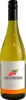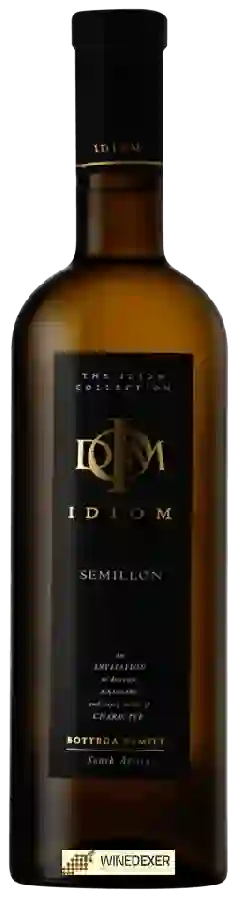
Winery IdiomSémillon
 White wine


This wine generally goes well with poultry, rich fish (salmon, tuna etc) or shellfish.

Wine flavors and olphactive analysis





On the nose the Sémillon of Winery Idiom in the region of Western Cape often reveals types of flavors of non oak, earth or microbio and sometimes also flavors of vegetal, oak or tree fruit.
Food and wine pairings with Sémillon
Pairings that work perfectly with Sémillon



Original food and wine pairings with Sémillon

The Sémillon of Winery Idiom matches generally quite well with dishes of rich fish (salmon, tuna etc), shellfish or sweet desserts such as recipes of leek and fresh salmon tart, pasta with scampi or tiramisu (original recipe).
Details and technical informations about Winery Idiom's Sémillon.
Discover the grape variety: Catawba
Aromatic and sweet whites and rosés, with a supple mouthfeel and preserved acidity, with intense aromas of fresh grape, strawberry, raspberry, flowers and the characteristic foxy note (the typical musky animal character of labrusca). Often vinified as medium-sweet, sparkling demi-sec and grape juice. Historic star of Ohio (Lake Erie), New York (Finger Lakes), Missouri and Ontario vineyards. A Vitis labrusca hybrid discovered around 1820 in North Carolina, one of the oldest American varieties.
Last vintages of this wine
The best vintages of Sémillon from Winery Idiom are 2015, 2017, 0, 2016
Informations about the Winery Idiom
The Winery Idiom is one of of the world's great estates. It offers 31 wines for sale in the of Western Cape to come and discover on site or to buy online.

The wine region of Western Cape
Cradle of South African wine. Signature Chenin Blanc (Steen, 20%) in ample, fresh whites with notes of quince, yellow apple, honey and acacia flower, from crisp dry to sweet. Sharp, iodised Sauvignon Blanc (Walker Bay, Constantia), balanced Chardonnay. Reds: emblematic Pinotage with roasted aromas (coffee, plum, smoke), firm Cabernet Sauvignon, spicy Syrah.
The word of the wine: Aging on lees
Maturing on the lees enhances the stability, aromatic complexity and texture of white wines, which gain in body and volume. This phenomenon is induced by autolysis, the process of self-degradation of the lees.