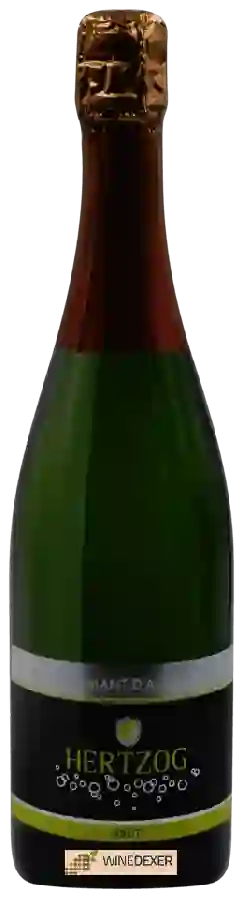
Winery HertzogCrémant d'Alsace Brut
 wine
wine
This wine generally goes well with
The Crémant d'Alsace Brut of the Winery Hertzog is in the top 0 of wines of Crémant d'Alsace.

Details and technical informations about Winery Hertzog's Crémant d'Alsace Brut.
Discover the grape variety: Macabeu
Lively, structured dry whites with a pale golden robe, a taut palate with preserved acidity, and signature aromas of citrus (lemon, grapefruit), white flowers (acacia) and anise notes. Also sparkling (essential component of Cava DO). Grown in Roussillon, Catalonia and Rioja, a pillar of great Riojan and Roussillon whites. Native white grape of Aragon (also known as Viura, Macabeo).
Informations about the Winery Hertzog
The Winery Hertzog is one of of the world's great estates. It offers 25 wines for sale in the of Crémant d'Alsace to come and discover on site or to buy online.

The wine region of Crémant d'Alsace
France's best-selling sparkling wine after Champagne. Fine traditional-method bubbles (min. 9 months on lees), fresh and fruity with signature notes of green apple, pear, white flowers and almond, a taut finish. Dominant Pinot Blanc (roundness, supple base), ample Pinot Auxerrois, mineral Riesling and taut Chardonnay.
The wine region of Alsace
Capital of great French aromatic whites, most often dry and single-varietal. Straight, mineral Riesling (lemon, gunflint), opulent, exuberant Gewurztraminer (lychee, rose, spices), round, smoky Pinot Gris, floral, crisp Muscat, supple Pinot Blanc. Fine, fruity Crémants d'Alsace, exceptional sweet Vendanges Tardives and Sélection de Grains Nobles. 15,500 ha at the foot of the Vosges on varied soils, 51 Grands Crus since 1975.
The word of the wine: Plant
Smells present in certain wines and characteristic of the plant world. Heather, mint or blackcurrant leaf are considered pleasant, while herbaceous notes are considered a defect.