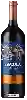
Winery Gran CaleroReserva Cabernet Sauvignon
 wine
wine
This wine generally goes well with
The Reserva Cabernet Sauvignon of the Winery Gran Calero is in the top 0 of wines of Yecla.
Details and technical informations about Winery Gran Calero's Reserva Cabernet Sauvignon.
Discover the grape variety: Chancellor
Cross between 5163 Seibel (2 Gaillard x 2510 Seibel) and 880 Seibel (28112 Couderc x 2003 Seibel) obtained by Albert Seibel (1844-1936). It was the first direct-producing hybrid cultivated in France and has now practically disappeared. It can still be found in a few old vines in the form of isolated strains. It can be found in the United States (New York, etc.) and in Canada, where it is part of the grape varieties grown on a large number of vineyards.
Informations about the Winery Gran Calero
The Winery Gran Calero is one of of the world's greatest estates. It offers 4 wines for sale in the of Yecla to come and discover on site or to buy online.

The wine region of Yecla
The wine region of Yecla is located in the region of Murcie of Spain. Wineries and vineyards like the Domaine Castaño or the Domaine Barahonda produce mainly wines red, white and pink. The most planted grape varieties in the region of Yecla are Cabernet-Sauvignon, Merlot and Tempranillo, they are then used in wines in blends or as a single variety. On the nose of Yecla often reveals types of flavors of vegetal, tree fruit or rosemary and sometimes also flavors of tar, sandalwood or bramble.
The wine region of Murcie
Murcia is one of the smallest and least known regions in Spain. Nestled in the extreme Southeast of the country, it is bordered by Andalusia to the west, Castilla-La Mancha to the North, Valencia to the east and the Mediterranean Sea to the south. This small administrative region consists of a single province and an administrative centre that share the same name. As far as wine is concerned, Murcia has three designations of origin.
The word of the wine: Aging
Period during which a wine is kept in a cellar where it goes through different phases of evolution of its aromatic range and a maturation of its constituents (evolution of the colour, refining of the tannins, harmonization of the different flavours, etc.). The wine evolves better and less quickly in large containers, whereas it deteriorates prematurely in half-bottles.