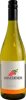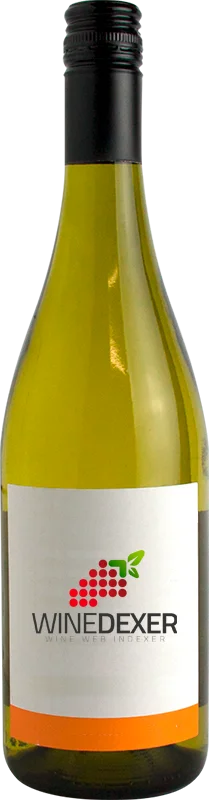
Winery GoesTempos Brs Lorena Branco Seco
 White wine


This wine generally goes well with sweet desserts
Food and wine pairings with Tempos Brs Lorena Branco Seco
Pairings that work perfectly with Tempos Brs Lorena Branco Seco

Original food and wine pairings with Tempos Brs Lorena Branco Seco
The Tempos Brs Lorena Branco Seco of Winery Goes matches generally quite well with dishes of sweet desserts such as recipes of chocolate mousse.
Details and technical informations about Winery Goes's Tempos Brs Lorena Branco Seco.
Discover the grape variety: Nuragus
A very old variety grown in Italy, where it still plays an important role, particularly in Sardinia. - Synonyms: meragus, abbondosa, bruscu biancu, axina, garnaccia, granazza, burdu, malvasia di tura (for all the synonyms of the varieties). - Description: medium to large bunches, conical, voluminous, compact, short strong stems, often with a lignified part; medium-sized, spherical or slightly elongated berries, greenish-yellow to golden-yellow skin, sometimes amber with a pink tinge when fully ripe, soft pulp with a simple taste. - Production potential: late budding. Quite vigorous and very productive, suitable for almost all types of soil. Hardy, it resists well to the various cryptogamic diseases. Maturity: 3rd period average. - Wine type/Aromas: gives a heady wine of yellow straw color with sometimes golden reflections, provided in the majority of the cases with a good acidity.
Last vintages of this wine
The best vintages of Tempos Brs Lorena Branco Seco from Winery Goes are 2012, 2019, 2008
Informations about the Winery Goes
The Winery Goes is one of of the world's great estates. It offers 35 wines for sale in the of Sao Paulo to come and discover on site or to buy online.

The wine region of Sao Paulo
Brazil is the largest country in South America and the fifth-largest in the world. It has a sizable wine industry, but is probably best known in global markets for spirits, and in particular Cachaça. With roughly 83,000 hectares (205,000 acres) of Vineyard">Vineyard, it ranks just behind its near-neighbors Argentina and Chile in terms of acreage under vine. Only a small proportion (about 10 percent) of these acres are planted with Vitis vinifera vines, however this large acreage does not translate into large volumes of quality wine.
The word of the wine: Tries (harvest by)
Harvesting in several successive passages to harvest at their optimal concentration the grapes affected by noble rot. They allow the production of great sweet wines.