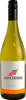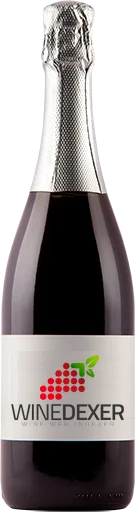
Winery MontresorCuvée Graffiti Selvaggio Frizzante
 Sparkling wine


This wine generally goes well with
Details and technical informations about Winery Montresor's Cuvée Graffiti Selvaggio Frizzante.
Discover the grape variety: Saint Pierre doré
Belonging to the Estaing wines, the Saint Pierre doré is also called Roussellou. With an average budding, this variety is presented in the form of full, winged, elongated and very large bunches, with pulpy, spherical and medium-sized berries. When ripe, the fruit is golden-white in colour, with bronze leaves, which may be three-lobed or whole. The red colour is also found on the internodes of its herbaceous branch. For best results, a fairly long pruning will suit the Saint Pierre Doré, which is not overly afraid of oidium or mildew, but more afraid of grey rot. The characteristics of the roussellou mean that it could play a major role in the production of sparkling wines. The vine does indeed give a very acidic taste, not very sweet and with low degree aromas. It has been noted that the extent of the vineyard recorded in 1958 is 123 Ha, to be reduced to 1 Ha in 1994 on the French territory.
Last vintages of this wine
The best vintages of Cuvée Graffiti Selvaggio Frizzante from Winery Montresor are 0
Informations about the Winery Montresor
The Winery Montresor is one of of the world's great estates. It offers 126 wines for sale in the of Vino da Tavola to come and discover on site or to buy online.

The wine region of Vino da Tavola
Vino da Tavola was the most basic classification of Italian wines. It is now renamed simply "Vino" and appears on labels as Vino d'Italia. The original name literally means "table wine" as opposed to premium wines from specific geographical locations (see EU wine label). In May 2011, the first legal steps were taken to abolish the Vino da Tavola category, in favor of a New classification of wines called simply Vino.
The word of the wine: Foaming
Name given to the second alcoholic fermentation that sparkling wines undergo. It gives rise to a release of carbon dioxide in the bottle.