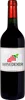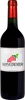
Winery Gelson'sRed Cuvée
 wine
wine
This wine generally goes well with
The Red Cuvée of the Winery Gelson's is in the top 0 of wines of Napa Valley.

Details and technical informations about Winery Gelson's's Red Cuvée.
Discover the grape variety: Ribol
Light, simple, fruity reds with a pale ruby robe, silky tannins and an airy, moderately acidic palate, with undemonstrative aromas of red fruits. A discreet rustic profile. Preserved in a few ampelographic collections for its heritage value, Ribol is an ancient variety whose commercial cultivation has almost vanished; it is studied for its genetic interest. A rare black grape, poorly documented, grown in negligible quantities.
Informations about the Winery Gelson's
The Winery Gelson's is one of of the world's greatest estates. It offers 11 wines for sale in the of Napa Valley to come and discover on site or to buy online.

The wine region of Napa Valley
Absolute reference for American Cabernet Sauvignon: powerful, opulent reds with ripe aromas of blackcurrant, blackberry, chocolate and cedar, velvety tannins and a silky finish, long ageing. Also round Merlot, rich buttery Chardonnay, fruity Sauvignon Blanc, spicy Zinfandel. Narrow Californian valley between the Mayacamas and Vaca Mountains, tempered by San Pablo Bay fog, 17 sub-AVAs (Oakville, Rutherford, Stags Leap, Howell Mountain). Cradle of icons Opus One, Screaming Eagle, Caymus.
The wine region of California
Powerful, sunny reds: dense Napa Cabernet Sauvignon (blackcurrant, chocolate, tobacco, ample tannins), spicy, jammy Zinfandel from the Sierra Foothills, silky red-fruited Pinot Noir on the cool coast (Sonoma, Russian River, Central Coast). Opulent, buttery Chardonnay, notes of yellow fruit and vanilla. Varied climate, from the hot interior to the Pacific-cooled coast. 80% of US production, 139 AVAs including Napa (1st AVA, 1981).
The word of the wine: Performance
Quantity of grapes harvested per hectare. In AOC, the average yield is limited on the proposal of the appellation syndicate, validated by the Inao. The use of high-performance plant material (especially clones) and better control of vine diseases have increased yields. This is not without consequences on the quality of the wines (dilution) and on the state of the market (too much wine). We must not over-simplify: low yields are not synonymous with quality, and it is often in years with generous harvests that we find the greatest vintages (1982 and 1986 in Bordeaux, 1996 in Champagne, 1990 and 2005 in Burgundy...).