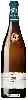
Winery Garamvári SzőlőbirtokBalatonboglári Rózsapusztai Merlot
 wine
wine
This wine generally goes well with
The Balatonboglári Rózsapusztai Merlot of the Winery Garamvári Szőlőbirtok is in the top 0 of wines of Balaton.
Details and technical informations about Winery Garamvári Szőlőbirtok's Balatonboglári Rózsapusztai Merlot.
Discover the grape variety: Cayuga
Complex interspecific cross between white seyval (5-276 Seyve-Villard) and schuyler obtained in 1945 by Robinson Willard B. and Einset John at Cornell University in Geneva (USA). It can also be found in Canada, almost unknown in France.
Informations about the Winery Garamvári Szőlőbirtok
The Winery Garamvári Szőlőbirtok is one of of the world's great estates. It offers 73 wines for sale in the of Balaton to come and discover on site or to buy online.

The wine region of Balaton
Balatonboglar (South Balaton) is one of several wine regions on the shores of Lake Balaton, in the Transdanubia region of western Hungary. Lake Balaton is a Long, thin freshwater lake measuring almost 80 kilometers (50 miles) in Length, sometimes referred to as the 'Hungarian Sea. ' It is the largest lake in Central Europe and Hungary's most popular tourist destination. A wide portfolio of the popular, internationally recognized Grape varieties are grown here, including a number of the French classics.
The word of the wine: Deposit
Solid particles that can naturally coat the bottom of a bottle of wine. It is rather a guarantee that the wine has not been mistreated: in fact, to avoid the natural deposit, rather violent processes of filtration or cold passage (- 7 or - 8 °C) are used in order to precipitate the tartar (the small white crystals that some people confuse with crystallized sugar: just taste to dissuade you from it)