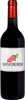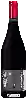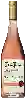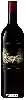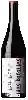
Winery Gabriel CorcolFleur de Camille Rouge Semi Sweet
 Red wine



This wine generally goes well with
Details and technical informations about Winery Gabriel Corcol's Fleur de Camille Rouge Semi Sweet.
Discover the grape variety: Couderc 4401
An interspecific cross made in 1884 by Georges Couderc (1850-1928) between chasselas rose and rupestris. This direct-producing hybrid was multiplied much more in the south-west of France and in the Loire Valley, and in some cases was even used as rootstock. François Baco (1865-1947) and Vincent Malègue (1830-1915) also used it as a progenitor. - Synonymy: red bird, tank, Terray hybrid, malafosse, oazo rukh, sakhotin (for all the grape variety synonyms, click here!). - Description: small to medium-sized bunches, cylindrical-conical, winged, more or less compact, sometimes with small green berries, medium-sized stalks remaining green when ripe; small, spherical berries, beautiful bluish-black skin, very pruinose, pulpy, with coloured juice.
Last vintages of this wine
The best vintages of Fleur de Camille Rouge Semi Sweet from Winery Gabriel Corcol are 2017
Informations about the Winery Gabriel Corcol
The Winery Gabriel Corcol is one of of the world's greatest estates. It offers 6 wines for sale in the of Vin de France to come and discover on site or to buy online.

The wine region of Vin de France
Vin de France is the most basic level of quality for wines from France. These are generally uncomplicated everyday drinks - most often blends, but perhaps also Varietal wines based on a well-known Grape variety such as Cabernet Sauvignon, Merlot, Chardonnay or Sauvignon Blanc. Wines from France are those that do not meet the criteria stipulated by the Protected Designation of Origin (PDO) or Protected Geographical Indication (PGI) laws (see information on French wine labels). This may be because the vineyards are outside the delimited production areas or because the grape varieties or winemaking techniques used do not conform to the rules of the local appellations.
The word of the wine: Deposit
Solid particles that can naturally coat the bottom of a bottle of wine. It is rather a guarantee that the wine has not been mistreated: in fact, to avoid the natural deposit, rather violent processes of filtration or cold passage (- 7 or - 8 °C) are used in order to precipitate the tartar (the small white crystals that some people confuse with crystallized sugar: just taste to dissuade you from it)