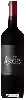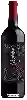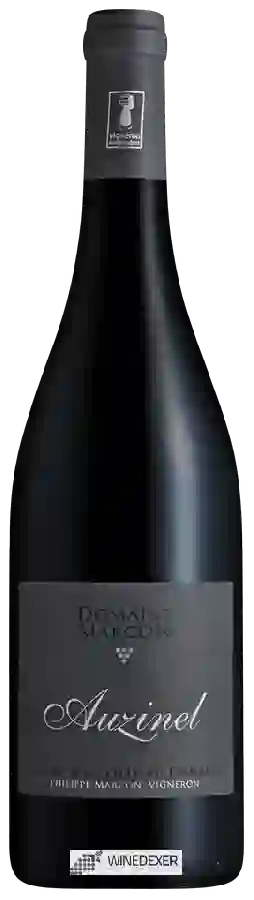
Domaine MarconAuzinel
 Red wine



In the mouth this red wine is a powerful with a nice balance between acidity and tannins.
This wine generally goes well with beef, veal or pasta.
Taste structure of the Auzinel from the Domaine Marcon
Light | Bold | |
Smooth | Tannic | |
Dry | Sweet | |
Soft | Acidic |
In the mouth the Auzinel of Domaine Marcon in the region of Pays d'Oc is a powerful with a nice balance between acidity and tannins.
Food and wine pairings with Auzinel
Pairings that work perfectly with Auzinel



Original food and wine pairings with Auzinel
The Auzinel of Domaine Marcon matches generally quite well with dishes of beef, pasta or veal such as recipes of beef tongue with pickle sauce, spaghetti with courgettes and italian ham or gizzards in sauce.
Details and technical informations about Domaine Marcon's Auzinel.
Discover the grape variety: Babic
This is an old indigenous variety that has been cultivated for a long time in Croatia, especially in central and southern Dalmatia. It can also be found in Hungary, in the former Yugoslavia to which Croatia belonged... in France it is almost unknown. It should be noted that it would be related with the dobricic and thus also with the plavac mali its son. Babic should not be confused with babica crni, another Croatian black grape variety.
Informations about the Domaine Marcon
The Domaine Marcon is one of of the world's greatest estates. It offers 4 wines for sale in the of Pays d'Oc to come and discover on site or to buy online.

The wine region of Pays d'Oc
Pays d'Oc is the PGI for red, white and rosé wines that are produced over a wide area of the southern coast of France. The PGI catchment area corresponds roughly to the Languedoc-roussillon">Languedoc-Roussillon wine region, one of the largest wine regions in France. The area covers all wines that are not produced under the strict laws that govern AOC-level appellations in the regions: among them, Corbières, Minervois and the Languedoc appellation itself. The Pays d'Oc PGI is arguably the most important in France, producing the majority of the country's PGI wines.
The word of the wine: Thick
Said of a heavy, pasty wine lacking in finesse.