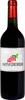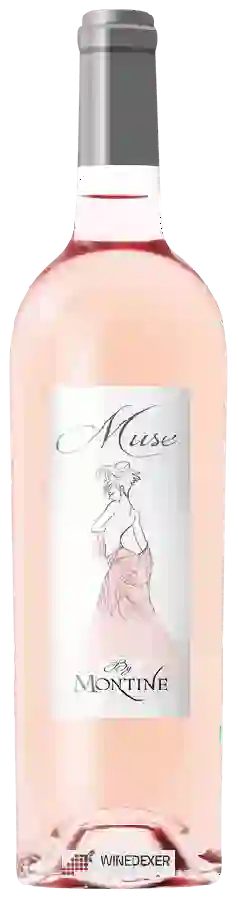
Domaine de MontineMuse Rosé
 Pink wine


This wine generally goes well with beef, lamb or mature and hard cheese.
Food and wine pairings with Muse Rosé
Pairings that work perfectly with Muse Rosé



Original food and wine pairings with Muse Rosé

The Muse Rosé of Domaine de Montine matches generally quite well with dishes of beef, lamb or spicy food such as recipes of beef mironton, express couscous in a pressure cooker or sun wheat.
Details and technical informations about Domaine de Montine's Muse Rosé.
Discover the grape variety: Tchilar
It is certainly one of the best grape varieties in Armenia, where it originates.
Last vintages of this wine

The best vintages of Muse Rosé from Domaine de Montine are 2018, 2019
Informations about the Domaine de Montine
The Domaine de Montine is one of of the world's greatest estates. It offers 26 wines for sale in the of Drôme to come and discover on site or to buy online.

The wine region of Drôme
The wine region of Drôme is located in the region of Méditerranée of Vin de Pays of France. Wineries and vineyards like the Domaine Lombard or the Domaine de Montine produce mainly wines red, white and pink. The most planted grape varieties in the region of Drôme are Viognier, Cabernet-Sauvignon and Merlot, they are then used in wines in blends or as a single variety. On the nose of Drôme often reveals types of flavors of citrus, citrus fruit or cherry and sometimes also flavors of smoke, earthy or leather.
The wine region of Méditerranée
Méditérranée is a PGI title that covers wines produced in a large area of the South-eastern coast of France, roughly corresponding to the wine region of Provence but also including Part of the Rhône Valley. The PGI shares its territory with multiple AOC appellations as varied as Châteauneuf-du-Pape, Bandol and Côtes de Provence. The PGI Méditérranée catchment area extends over 10 departments (including the two on the island of Corsica), as well as smaller parts of the Isère, Loire and Rhône departments. Viticulture is essential to the culture and economy of this part of France.
The word of the wine: Deposit
Solid particles that can naturally coat the bottom of a bottle of wine. It is rather a guarantee that the wine has not been mistreated: in fact, to avoid the natural deposit, rather violent processes of filtration or cold passage (- 7 or - 8 °C) are used in order to precipitate the tartar (the small white crystals that some people confuse with crystallized sugar: just taste to dissuade you from it)