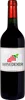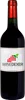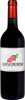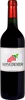
Winery FeudoroLevango Montepulciano d'Abruzzo
 wine
wine
This wine generally goes well with
The Levango Montepulciano d'Abruzzo of the Winery Feudoro is in the top 0 of wines of Montepulciano d'Abruzzo.
Details and technical informations about Winery Feudoro's Levango Montepulciano d'Abruzzo.
Discover the grape variety: Salagnin
Discovered in the 1870s by Mr. Robin, who lived in the Drôme at the time in Lapeyrouse-Mornay, this ancient grape variety is believed to have originated in the north of Isère. It can also be found in Switzerland. According to Thierry Lacombe (I.N.R.A./Montpellier), it is the result of a natural intraspecific crossing between Tressot Noir and Mondeuse Blanche. It should be noted in passing that, on the one hand, it has exactly the same parents as the mondeuse noire, that on the other hand, it is the mother of the diolinoir and, finally, is related to the servanin. Robin noir is not widely propagated today because it is not well known, although it is listed in the Official Catalogue of Wine Grape Varieties, list A1.
Informations about the Winery Feudoro
The Winery Feudoro is one of of the world's greatest estates. It offers 10 wines for sale in the of Montepulciano d'Abruzzo to come and discover on site or to buy online.

The wine region of Montepulciano d'Abruzzo
The wine region of Montepulciano d'Abruzzo is located in the region of Abruzzes of Italy. We currently count 1280 estates and châteaux in the of Montepulciano d'Abruzzo, producing 2020 different wines in conventional, organic and biodynamic agriculture. The wines of Montepulciano d'Abruzzo go well with generally quite well with dishes .
The wine region of Abruzzo
Abruzzo is an Italian wine region located on the eastern (Adriatic) coast. Its immediate neighbors in CentralItaly are Marche to the North, Lazio to the west and southwest and Molise to the southeast. Abruzzo has one DOCG - Montepulciano d'Abruzzo Colline Teramane - and three DOC wine appellations. The reds and Cerasuolo d'Abruzzo and Montepulciano d'Abruzzo, as well as the white wine appellation Trebbiano d'Abruzzo are the most notable, followed by the lesser-known Controguerra.
The word of the wine: MA
Auxiliary brand or buyer's brand (supermarket for example) gathering champagnes of various origins. It offers no guarantee of quality or traceability.