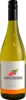
Winery ArtadiViura
 White wine


In the mouth this white wine is a powerful.
This wine generally goes well with appetizers and snacks, lean fish or shellfish.
Taste structure of the Viura from the Winery Artadi
Light | Bold | |
Dry | Sweet | |
Soft | Acidic |
In the mouth the Viura of Winery Artadi in the region of Rioja is a powerful.
Food and wine pairings with Viura
Pairings that work perfectly with Viura



Original food and wine pairings with Viura

The Viura of Winery Artadi matches generally quite well with dishes of shellfish, appetizers and snacks or lean fish such as recipes of marco polo salad, caricoles as in brussels (translation: sea snails or whelks) or sole fillets with shrimp and curry.
Details and technical informations about Winery Artadi's Viura.
Discover the grape variety: Salagnin
Discovered in the 1870s by Mr. Robin, who lived in the Drôme at the time in Lapeyrouse-Mornay, this ancient grape variety is believed to have originated in the north of Isère. It can also be found in Switzerland. According to Thierry Lacombe (I.N.R.A./Montpellier), it is the result of a natural intraspecific crossing between Tressot Noir and Mondeuse Blanche. It should be noted in passing that, on the one hand, it has exactly the same parents as the mondeuse noire, that on the other hand, it is the mother of the diolinoir and, finally, is related to the servanin. Robin noir is not widely propagated today because it is not well known, although it is listed in the Official Catalogue of Wine Grape Varieties, list A1.
Last vintages of this wine
The best vintages of Viura from Winery Artadi are 0
Informations about the Winery Artadi
The Winery Artadi is one of of the world's great estates. It offers 39 wines for sale in the of Rioja to come and discover on site or to buy online.

The wine region of Rioja
Rioja, in northern Spain, is best known for its berry-flavored, barrel-aged red wines made from Tempranillo and Garnacha. It is probably the leading wine region in Spain. It is certainly the most famous, rivaling only Jerez. The Vineyards follow the course of the Ebro for a hundred kilometres between the towns of Haro and Alfaro.
The word of the wine: Retrieved from
Wine that has lost its aromatic potential after prolonged aeration.