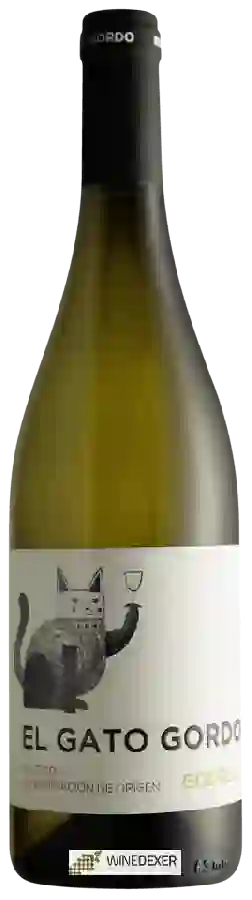
Winery El Gato GordoGodello
 White wine



This wine generally goes well with

Wine flavors and olphactive analysis

On the nose the Godello of Winery El Gato Gordo in the region of Castille-et-Léon often reveals types of flavors of tree fruit, citrus fruit.
Details and technical informations about Winery El Gato Gordo's Godello.
Discover the grape variety: Findling
Aromatic, supple whites with a pale golden robe, an ample palate with moderate acidity, and signature muscat aromas of white flowers (elderflower), yellow fruits (peach) and riper notes than its parent Müller-Thurgau. Accessible and fruity profile. Grown on a few hectares in Rhineland-Palatinate for local cuvées. A mutation of Müller-Thurgau obtained in 1934 in Germany, with smaller bunches and earlier ripening.
Last vintages of this wine
The best vintages of Godello from Winery El Gato Gordo are 2016, 0, 2017
Informations about the Winery El Gato Gordo
The Winery El Gato Gordo is one of of the world's greatest estates. It offers 3 wines for sale in the of Bierzo to come and discover on site or to buy online.

The wine region of Bierzo
DO of Castile and Leon in a northwestern basin at the gates of Galicia, mild Atlantic climate. Signature Mencia (62%): elegant, fresh reds with signature notes of raspberry, cherry, violet, graphite and a slatey mineral touch, fine tannins and chiselled acidity — Atlantic finesse sometimes compared to Pinot Noir. Old bush vines on slate and schist. Opulent Godello whites (pear, citrus, butter), Dona Blanca.
The wine region of Castille-et-Léon
Cradle of great Castilian reds on high-altitude plateaus (450-1000 m) of the Duero. Tempranillo king (Tinto Fino, Tinta de Toro): powerful, structured reds with notes of black cherry, blackberry, plum, leather and spices, firm tannins and length worthy of long ageing. Stars: Ribera del Duero (Vega Sicilia, Pingus), fleshy Toro, Bierzo (fresh mineral Mencía). Lively herbaceous Verdejo whites from Rueda, cut grass and citrus.
The word of the wine: Pruine
A thin, fluffy film that covers the surface of the grape. It makes the berry impermeable and contains the indigenous yeasts necessary for the fermentation of the must.