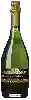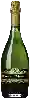
Domaine Ste. Michelle50 Anniversary Brut
 wine
wine
This wine generally goes well with
The 50 Anniversary Brut of the Domaine Ste. Michelle is in the top 0 of wines of Columbia Valley.

Details and technical informations about Domaine Ste. Michelle's 50 Anniversary Brut.
Discover the grape variety: Landal
Deeply colored, simple and fruity reds with a dark ruby robe, lightly firm tannins and a direct palate, showing signature aromas of red fruits (cherry, raspberry), gentle spices and herbaceous notes. Cold and disease resistant profile. Grown mainly in Canada (Quebec, Ontario) and the northeastern US for vineyards with harsh continental climates. French black hybrid obtained around 1933 by Pierre Landot (Landot 244).
Informations about the Domaine Ste. Michelle
The Domaine Ste. Michelle is one of of the world's greatest estates. It offers 9 wines for sale in the of Columbia Valley to come and discover on site or to buy online.

The wine region of Columbia Valley
Cradle of Washington State's great reds. Dense, structured Cabernet Sauvignon (blackcurrant, blackberry, graphite, firm tannins), round velvety Merlot, signature Syrah with peppery notes, black olive and deep black fruit. Also precise whites: balanced Chardonnay, taut fruity Riesling with peach notes. Semi-desert vineyard of 24,300 ha sheltered by the Cascades, loess soils over basalt, strong temperature swings.
The wine region of Washington
2nd US producer by volume, on the arid, sunny Columbia Valley. Star Cabernet Sauvignon (~60% of reds): powerful and structured with signature notes of blackcurrant, blackberry, cedar, dry herbs and graphite, firm tannins. Fleshy, peppery Syrah (black fruits, smoked meat). Round, fruity Merlot, historic mineral Riesling (dry and off-dry), precise Chardonnay and ample Sémillon.
The word of the wine: Deposit
Solid particles that can naturally coat the bottom of a bottle of wine. It is rather a guarantee that the wine has not been mistreated: in fact, to avoid the natural deposit, rather violent processes of filtration or cold passage (- 7 or - 8 °C) are used in order to precipitate the tartar (the small white crystals that some people confuse with crystallized sugar: just taste to dissuade you from it)