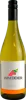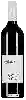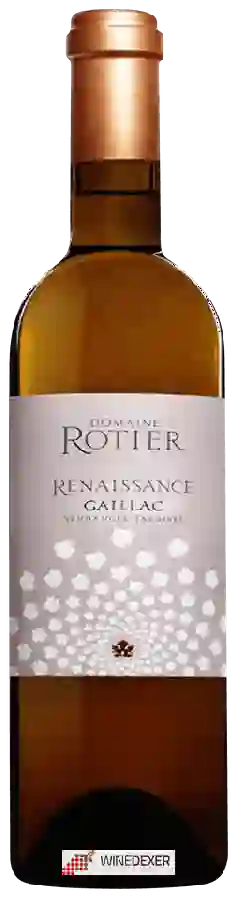
Domaine RotierRenaissance Vendanges Tardives
 Sweet wine


This wine generally goes well with

Wine flavors and olphactive analysis



On the nose the Renaissance Vendanges Tardives of Domaine Rotier in the region of South West often reveals types of flavors of apricot, honey or non oak and sometimes also flavors of earth, tree fruit or citrus fruit.
Details and technical informations about Domaine Rotier's Renaissance Vendanges Tardives.
Discover the grape variety: Zinfandel
Generous, high-alcohol reds with a dark robe and indulgent palate, showing aromas of stewed blackberry, raspberry, black pepper, liquorice, cinnamon and cooked fruit. Also vinified as a popular sweet rosé (White Zinfandel). Star of California (Lodi, Sonoma, Dry Creek Valley, Paso Robles) with sought-after century-old vines. Identical to Italian Primitivo and Croatian Crljenak Kaštelanski by DNA analysis.
Last vintages of this wine
The best vintages of Renaissance Vendanges Tardives from Domaine Rotier are 2015, 2014, 2013
Informations about the Domaine Rotier
The Domaine Rotier is one of of the world's greatest estates. It offers 14 wines for sale in the of Gaillac to come and discover on site or to buy online.

The wine region of Gaillac
Millennia-old South-West mosaic (banks of the Tarn) with rare native grapes: Mauzac reigns in whites — dry, pearled or sweet with notes of apple, pear, honey and white flowers, signature freshness. Ample Loin-de-l'œil and Ondenc complement. Duras in spicy, peppery reds, fleshy Braucol (Fer Servadou) (blackcurrant, raspberry, blackberry, structured tannins) and Syrah in blends. Iconic ancestral-method Gaillac sparkling.
The wine region of South West
French mosaic of strong identities south of Bordeaux. Cahors and its Malbec ("black wine"): deep reds with notes of blackberry, plum, violet, tobacco and cocoa, firm tannins. Madiran and its dense, age-worthy Tannat. Jurançon whites: golden sweet (apricot, honey, pineapple) and lively dry from Petit Manseng.
The word of the wine: Drawing (liqueur de)
In champagne and sparkling wines of traditional method, addition to the wine, at the time of bottling (tirage) of sugars and yeasts dissolved in wine. These components will provoke the second fermentation in the bottle leading to the formation of carbon dioxide bubbles.