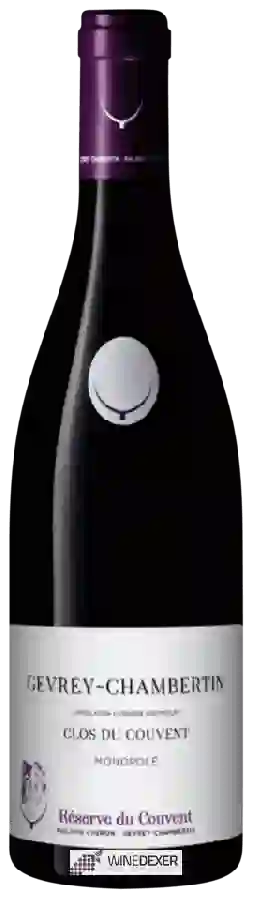
Domaine du CouventGevrey-Chambertin Clos du Couvent Monopole
 wine
wine
In the mouth this wine is a with a nice balance between acidity and tannins.
This wine generally goes well with
The Gevrey-Chambertin Clos du Couvent Monopole of the Domaine du Couvent is in the top 0 of wines of Gevrey-Chambertin.

Taste structure of the Gevrey-Chambertin Clos du Couvent Monopole from the Domaine du Couvent
Light | Bold | |
Smooth | Tannic | |
Dry | Sweet | |
Soft | Acidic |
In the mouth the Gevrey-Chambertin Clos du Couvent Monopole of Domaine du Couvent in the region of Burgundy is a with a nice balance between acidity and tannins.
Details and technical informations about Domaine du Couvent's Gevrey-Chambertin Clos du Couvent Monopole.
Discover the grape variety: Terrano
Nervy, mineral reds with an intense violet-ruby robe, firm tannins and cutting acidity, showing aromas of red fruits (tart cherry, redcurrant), blackberry, wild herbs, iron and characteristic mineral notes of karst soils. Refreshing palate, saline finish. Star of Carso DOC (Friuli, Italy) and Kras (Slovenia) on the ferruginous red soils of the Adriatic plateau. Autochthonous Friulian-Slovenian variety, related to refosco.
Informations about the Domaine du Couvent
The Domaine du Couvent is one of of the world's greatest estates. It offers 13 wines for sale in the of Gevrey-Chambertin to come and discover on site or to buy online.

The wine region of Gevrey-Chambertin
The Champs-Élysées of Burgundy in the Côte de Nuits: signature Pinot Noir reigns exclusively in reds — intense ruby with carmine glints, complete and structured with strawberry, cherry, blackberry, violet and a liquorice touch, undergrowth and dried fruit on ageing, firm yet silky tannins marrying power and elegance. More robust than its Côte de Beaune neighbours. Village AOC (1936) over Gevrey and Brochon, 26 Premiers Crus and 9 Grands Crus including legendary Chambertin and Clos de Bèze.
The wine region of Burgundy
Absolute reference for great terroir wines: opulent, mineral Chardonnay in whites (chiselled Chablis, buttery Meursault, majestic Montrachet), fine and silky Pinot Noir in reds (full-bodied Gevrey, structured Pommard, delicate Volnay). Exceptional age-worthy wines with complex notes - red fruits, undergrowth, butter, hazelnut. Some lively Aligoté and light Gamay (Mâconnais). 29,500 ha, 84 tiered AOCs (Régionale, Village, 1er Cru, Grand Cru), 1,247 UNESCO Climats.
The word of the wine: Sulphiting
Introduction of a sulphurous solution into a must or wine to protect it from accidents or diseases, or to select the ferments.