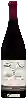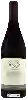
Domaine du BeauregardMaranges Côtes de Beaune
 Red wine


In the mouth this red wine is a with a nice freshness.
This wine generally goes well with poultry, beef or veal.
Taste structure of the Maranges Côtes de Beaune from the Domaine du Beauregard
Light | Bold | |
Smooth | Tannic | |
Dry | Sweet | |
Soft | Acidic |
In the mouth the Maranges Côtes de Beaune of Domaine du Beauregard in the region of Burgundy is a with a nice freshness.
Food and wine pairings with Maranges Côtes de Beaune
Pairings that work perfectly with Maranges Côtes de Beaune



Original food and wine pairings with Maranges Côtes de Beaune

The Maranges Côtes de Beaune of Domaine du Beauregard matches generally quite well with dishes of beef, veal or game (deer, venison) such as recipes of beef pot au feu (grandma's style), blanquette of veal in pickle sauce or duck baeckeoffe with christmas spices and dried fruits.
Details and technical informations about Domaine du Beauregard's Maranges Côtes de Beaune.
Discover the grape variety: Baco blanc
Interspecific crossing obtained in 1898 by François Baco (1865-1947) between the folle blanche and the noah, which it resembles somewhat. With the latter, Baco blanc is distinguished by a light beige felt under the leaf, whereas it is white for the noah. It is registered in the Official Catalogue of wine grape varieties list A1.
Informations about the Domaine du Beauregard
The Domaine du Beauregard is one of of the world's greatest estates. It offers 11 wines for sale in the of Maranges to come and discover on site or to buy online.

The wine region of Maranges
The wine region of Maranges is located in the region of Côte de Beaune of Burgundy of France. Wineries and vineyards like the Domaine Michel Sarrazin or the Domaine Chevrot produce mainly wines red, white and unknow. The most planted grape varieties in the region of Maranges are Pinot noir, Chardonnay and Gamay noir, they are then used in wines in blends or as a single variety. On the nose of Maranges often reveals types of flavors of earthy, microbio or black cherries and sometimes also flavors of dried fruit, cassis or tree fruit.
The wine region of Burgundy
Bourgogne is the catch-all regional appellation title of the Burgundy wine region in eastern France ("Bourgogne" is the French name for Burgundy). Burgundy has a Complex and comprehensive appellation system; counting Premier Cru and Grand Cru titles, the region has over 700 appellation titles for its wines. Thus, Burgundy wines often come from one Vineyard (or several separate vineyards) without an appellation title specific to the region, Village or even vineyard. A standard Burgundy wine may be made from grapes grown in one or more of Burgundy's 300 communes.
The word of the wine: Breaking
Accident (oxidation or reduction) causing a loss of limpidity of the wine.