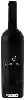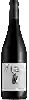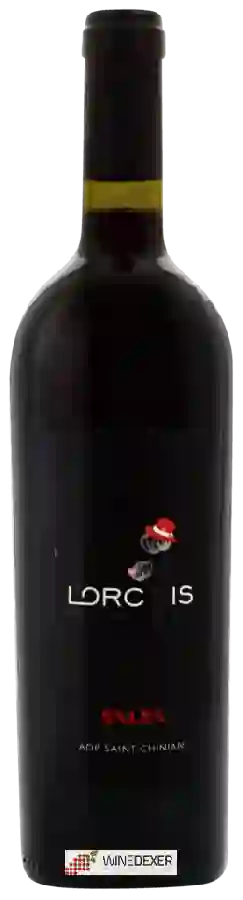
Domaine de l'Orchis PourpreSalsa Saint-Chinian
 Red wine
In the mouth this red wine is a powerful with a nice balance between acidity and tannins.
This wine generally goes well with beef, veal or pasta.
Taste structure of the Salsa Saint-Chinian from the Domaine de l'Orchis Pourpre
Light | Bold | |
Smooth | Tannic | |
Dry | Sweet | |
Soft | Acidic |
In the mouth the Salsa Saint-Chinian of Domaine de l'Orchis Pourpre in the region of Languedoc-Roussillon is a powerful with a nice balance between acidity and tannins.
Food and wine pairings with Salsa Saint-Chinian
Pairings that work perfectly with Salsa Saint-Chinian



Original food and wine pairings with Salsa Saint-Chinian
The Salsa Saint-Chinian of Domaine de l'Orchis Pourpre matches generally quite well with dishes of beef, pasta or veal such as recipes of cicadas at the chib, farfalle with gorgonzola or fillet of beef with morels.
Details and technical informations about Domaine de l'Orchis Pourpre's Salsa Saint-Chinian.
Discover the grape variety: Barbera noire
This variety has been cultivated for a very long time in Italy - currently in second place - and is very well known in Piedmont. It is, however, little known in France and is registered in the Official Catalogue of Wine Grape Varieties, list A1. It is not related to the white barbera, which also comes from the same country and region. It should be noted that other Italian grape varieties, mainly black, bear the name barbera, which should not be confused with the black Barbera that can also be found in Eastern Europe, South Africa and America.
Informations about the Domaine de l'Orchis Pourpre
The Domaine de l'Orchis Pourpre is one of of the world's greatest estates. It offers 5 wines for sale in the of Saint-Chinian to come and discover on site or to buy online.

The wine region of Saint-Chinian
Saint-Chinian is an appellation in the Languedoc-roussillon">Languedoc-Roussillon wine region of southern France. It is located between Minervois and Faugeres, which produce similar styles of robust red wine from similar grapes and in a similar landscape. It is also adjacent to the Muscat de Saint-Jean-de-Minervois appellation, which produces Sweet white wines. Therefore, the diversity of the Languedoc region is well demonstrated in this small area.
The wine region of Languedoc-Roussillon
Languedoc (formerly Coteaux du Languedoc) is a key appellation used in the Languedoc-Roussillon wine region of southern France. It covers Dry table wines of all three colors (red, white and rosé) from the entire region, but leaves Sweet and Sparkling wines to other more specialized appellations. About 75% of all Languedoc wines are red, with the remaining 25% split roughly down the middle between whites and rosés. The appellation covers most of the Languedoc region and almost a third of all the vineyards in France.
The word of the wine: Deposit
Solid particles that can naturally coat the bottom of a bottle of wine. It is rather a guarantee that the wine has not been mistreated: in fact, to avoid the natural deposit, rather violent processes of filtration or cold passage (- 7 or - 8 °C) are used in order to precipitate the tartar (the small white crystals that some people confuse with crystallized sugar: just taste to dissuade you from it)