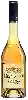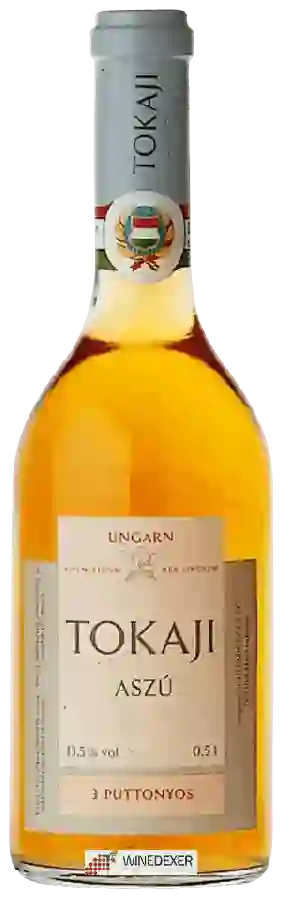
Winery DisznókóTokaji Aszú 3 Puttonyos
 Sweet wine


This wine is a blend of 2 varietals which are the Furmint and the Harslevelu.
This wine generally goes well with spicy food and sweet desserts.

Wine flavors and olphactive analysis


On the nose the Tokaji Aszú 3 Puttonyos of Winery Disznókó in the region of Tokaj often reveals types of flavors of earth.
Food and wine pairings with Tokaji Aszú 3 Puttonyos
Pairings that work perfectly with Tokaji Aszú 3 Puttonyos


Original food and wine pairings with Tokaji Aszú 3 Puttonyos
The Tokaji Aszú 3 Puttonyos of Winery Disznókó matches generally quite well with dishes of spicy food or sweet desserts such as recipes of lamb curry indian style or plain cupcakes.
Details and technical informations about Winery Disznókó's Tokaji Aszú 3 Puttonyos.
Discover the grape variety: Furmint
Taut, structured whites with cutting acidity and a mineral mouth, featuring aromas of apple, quince, citrus, honey, smoke and chalk notes. Made as ambitious dry wines (Tokaji száraz, Somló), off-dry and especially sumptuous botrytised sweet wines: Tokaji Aszú (legendary, classified by puttonyos) and Tokaji Eszencia. Highly susceptible to noble rot. The absolute star of Tokaj in Hungary, also in Slovakia, Slovenia (Šipon) and Austria. Native Hungarian grape.
Last vintages of this wine

The best vintages of Tokaji Aszú 3 Puttonyos from Winery Disznókó are 2011, 2004, 0, 2008
Informations about the Winery Disznókó
The Winery Disznókó is one of of the world's great estates. It offers 31 wines for sale in the of Tokaj to come and discover on site or to buy online.

The wine region of Tokaj
Cradle of the legendary Tokaji Aszú, "king of wines" per Louis XIV. Noble sweet wines based on Furmint (lively acidity prone to botrytis) and floral Hárslevelű ("linden leaf"): amber robe, signature aromas of honey, candied apricot, quince, orange peel, saffron, sustained sugar balanced by tense acidity. Measured in "puttonyos" (3 to 6) with Aszú Eszencia at the top. Also dry Furmint on the rise, straight and mineral.
The word of the wine: Over-ripeness
Characteristic of grapes harvested late, rich in sugar, which give wines often mellow and marked by candied aromas.