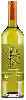
Château de LassalleBas Armagnac Baron H. De Pampelonne
 Other wine
This wine generally goes well with
Details and technical informations about Château de Lassalle's Bas Armagnac Baron H. De Pampelonne.
Discover the grape variety: Noual
This is an ancient grape variety from the southwest that used to be found mainly in the Lot (west of the Cahors vineyard) and Tarn-et-Garonne departments. It is now little present in the vineyard and is therefore in the process of disappearing, although it is listed in the Official Catalogue of Wine Grape Varieties, list A1.
Informations about the Château de Lassalle
The Château de Lassalle is one of of the world's greatest estates. It offers 1 wines for sale in the of Gascogne to come and discover on site or to buy online.

The wine region of Gascogne
Between the Landes forest, the Garonne and the Pyrenees, the Gascony hillsides cover the Gers dePartment and part of the Landes and Lot-et-Garonne departments. The vineyards occupy the same area as Armagnac, a brandy still produced in the region, but whose volumes have declined in favour of vins de pays (now PGI). Under the influence of a mild oceanic Climate, it is fairly wet in the west, drier in the east, especially in summer. In the west, the subsoil of tawny sands is of marine origin, covered with boulbènes; in the east, it gradually gives way to molasse, a rock resulting from the erosion of the Pyrenees.
The wine region of South West
The South-West is a large territorial area of France, comprising the administrative regions of Aquitaine, Limousin and Midi-Pyrénées. However, as far as the French wine area is concerned, the South-West region is a little less clear-cut, as it excludes Bordeaux - a wine region so productive that it is de facto an area in its own right. The wines of the South West have a Long and eventful history. The local rivers play a key role, as they were the main trade routes to bring wines from traditional regions such as Cahors, Bergerac, Buzet and Gaillac to their markets.
The word of the wine: Oenologist
Specialist in wine-making techniques. It is a profession and not a passion: one can be an oenophile without being an oenologist (and the opposite too!). Formerly attached to the Faculty of Pharmacy, oenology studies have become independent and have their own university course. Learning to make wine requires a good chemical background but also, increasingly, a good knowledge of the plant. Some oenologists work in laboratories (analysis). Others, the consulting oenologists, work directly in the properties.