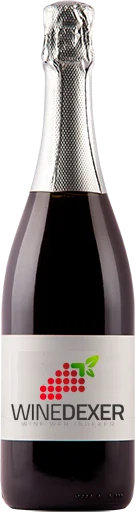
Winery Emmerich-KoebernikKlassische Flaschengärung Spätburgunder Weissherbst Extra Trocken
 Sparkling wine
This wine generally goes well with vegetarian
Food and wine pairings with Klassische Flaschengärung Spätburgunder Weissherbst Extra Trocken
Pairings that work perfectly with Klassische Flaschengärung Spätburgunder Weissherbst Extra Trocken

Original food and wine pairings with Klassische Flaschengärung Spätburgunder Weissherbst Extra Trocken
The Klassische Flaschengärung Spätburgunder Weissherbst Extra Trocken of Winery Emmerich-Koebernik matches generally quite well with dishes of vegetarian such as recipes of spinach and goat cheese quiche.
Details and technical informations about Winery Emmerich-Koebernik's Klassische Flaschengärung Spätburgunder Weissherbst Extra Trocken.
Discover the grape variety: Sérénèze de Voreppe
A very old grape variety that was once grown in the Grésivaudan region, and more generally in the Isère Valley from Grenoble to Tullins. It could also be found in Savoie and in the northern part of the Drôme. It should be noted that it was confused for a long time - even today - with the ciréné de Romans with which it shares many synonyms including sérenèze. According to Thierry Lacombe (I.N.R.A./Montpellier), it is the result of a natural intraspecific cross between the white gouais and the chatus. Sérénèze de Voreppe is registered in the Official Catalogue of wine grape varieties, list A1, under the name Sérénèze.
Informations about the Winery Emmerich-Koebernik
The Winery Emmerich-Koebernik is one of of the world's greatest estates. It offers 30 wines for sale in the of Nahe to come and discover on site or to buy online.

The wine region of Nahe
Nahe is one of the smaller German wine regions, named after the Nahe river which joins the Rhein at Rheinhessen/bingen">Bingen. The viticultural carea here is characterised by dramatic topography with steep slopes and craggy outcrops of metamorphic rock. Like most of the regions on or near the Rhine, its most prestigious wines are made from Riesling. There are around 4,000 hectares (10,000 acres) of Vineyards, spread across seven Grosslagen (wine districts) and over 300 Einzellagen (individual vineyard sites).
The word of the wine: Maceration
Prolonged contact and exchange between the juice and the grape solids, especially the skin. Not to be confused with the time of fermentation, which follows maceration. The juice becomes loaded with colouring matter and tannins, and acquires aromas. For a rosé, the maceration is short so that the colour does not "rise" too much. For white wines too, a "pellicular maceration" can be practised, which allows the wine to acquire more fat.