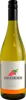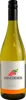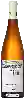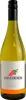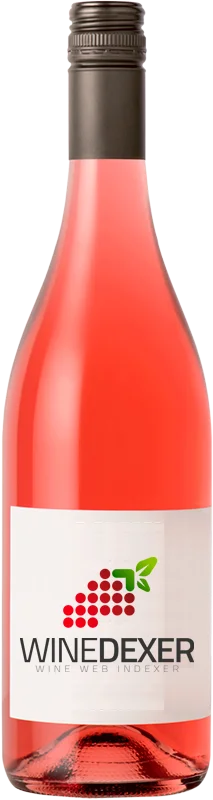
Winery CrassErbacher Spätburgunder Rosé
 Pink wine
This wine generally goes well with vegetarian
Food and wine pairings with Erbacher Spätburgunder Rosé
Pairings that work perfectly with Erbacher Spätburgunder Rosé

Original food and wine pairings with Erbacher Spätburgunder Rosé
The Erbacher Spätburgunder Rosé of Winery Crass matches generally quite well with dishes of vegetarian such as recipes of light tuna-tomato quiche (without cream).
Details and technical informations about Winery Crass's Erbacher Spätburgunder Rosé.
Discover the grape variety: Mollard
Mollard noir is a grape variety that originated in France (Haute-Alpe). It produces a variety of grape specially used for wine making. It is rare to find this grape to eat on our tables. This variety of grape is characterized by large bunches of grapes of medium size. Mollard noir can be found in several vineyards: South-West, Cognac, Bordeaux, Provence & Corsica, Rhone valley, Loire valley, Savoie & Bugey, Beaujolais.
Informations about the Winery Crass
The Winery Crass is one of of the world's great estates. It offers 38 wines for sale in the of Rheingau to come and discover on site or to buy online.

The wine region of Rheingau
Rheingau is one of the most important of Germany's 13 Anbaugebiete wine regions. However it is far from the biggest; with 3,076 hectares (7,600 acres) of Vineyard">Vineyards documented in 2012, its output is around one tenth of that from the Pfalz and Rheinhessen regions. Located on the Rhine a 20-minute drive west of Frankfurt, the -gau suffix denotes that it was once a county of the Frankish Empire. The classic Rheingau wine is a DryRiesling with pronounced Acidity and aromas of citrus fruits and smoke-tinged minerality – typically more "masculine" than its equivalent from the Mosel.
The word of the wine: Oenologist
Specialist in wine-making techniques. It is a profession and not a passion: one can be an oenophile without being an oenologist (and the opposite too!). Formerly attached to the Faculty of Pharmacy, oenology studies have become independent and have their own university course. Learning to make wine requires a good chemical background but also, increasingly, a good knowledge of the plant. Some oenologists work in laboratories (analysis). Others, the consulting oenologists, work directly in the properties.