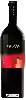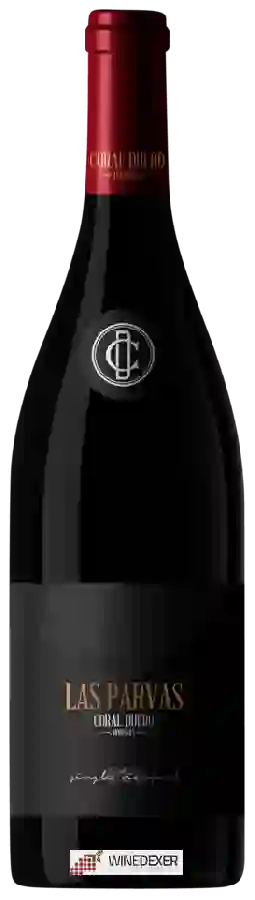
Winery Coral DueroLas Parvas
 wine
wine
This wine generally goes well with
The Las Parvas of the Winery Coral Duero is in the top 0 of wines of Toro.
Details and technical informations about Winery Coral Duero's Las Parvas.
Discover the grape variety: Négret castrais
The négret castrais is called mauzac noir. It is in the region of Toulouse that we find this variety doomed to disappear. Its origins are to be found in the Gaillac region, where it reaches maturity during the second period. The plant likes clay-limestone soils. It can be recognized by its late buds. Its bunches have short peduncles bearing compact, truncated cone-shaped loads. They are often winged and loaded with medium-sized berries. The pulp is covered with a thick skin whose colour is more or less red depending on the sun exposure of the bunch. Worms, excoliosis and powdery mildew are the main enemies of this variety. When vinified, Castres Negret gives off a fairly good character from its mauzac stock. The wine gives off notes of vanilla, apple, pear and jasmine. The juice is not very colourful and light in the mouth.
Last vintages of this wine


The best vintages of Las Parvas from Winery Coral Duero are 2016, 0
Informations about the Winery Coral Duero
The Winery Coral Duero is one of of the world's greatest estates. It offers 5 wines for sale in the of Toro to come and discover on site or to buy online.

The wine region of Toro
The wine region of Toro is located in the region of Castille-et-Léon of Spain. Wineries and vineyards like the Domaine Teso La Monja or the Domaine Teso La Monja produce mainly wines red, white and sweet. The most planted grape varieties in the region of Toro are Tempranillo, Verdejo and Pinot gris, they are then used in wines in blends or as a single variety. On the nose of Toro often reveals types of flavors of cherry, espresso or black olive and sometimes also flavors of menthol, bramble or cigar box.
The wine region of Castille-et-Léon
Located in the northern half of the Central Iberian plateau, Castilla y León is the largest of Spain's 17 administrative regions, covering about one-fifth of the country's total area. It extends about 350 kilometres (220 miles) from central Spain to the northern coast. Just as wide, it connects the Rioja wine region to the Portuguese border. Red wines reign supreme in Castilla y León, and the Tempranillo grape is undoubtedly the king.
The word of the wine: Balsamic
Aromas reminiscent of balsam, resin, incense, but also vanilla or liquorice wood.