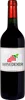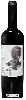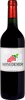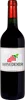
Winery Corado de ToreReserva
 wine
wine
This wine generally goes well with
The Reserva of the Winery Corado de Tore is in the top 0 of wines of La Mancha.

Details and technical informations about Winery Corado de Tore's Reserva.
Discover the grape variety: Villard blanc
Simple and lively dry whites with a pale golden colour, supple palate and preserved acidity, with understated aromas of white flowers, citrus (lemon) and hybrid notes. A productive, disease-resistant profile to drink young. Now marginal in France, it survives in a few heritage plots and varietal collections among the preserved Seyve-Villard hybrids. A French white hybrid obtained by Bertille Seyve in Bourgoin-Jallieu (Seyve-Villard 12-375).
Informations about the Winery Corado de Tore
The Winery Corado de Tore is one of of the world's greatest estates. It offers 5 wines for sale in the of La Mancha to come and discover on site or to buy online.

The wine region of La Mancha
World's largest contiguous wine area (190,000 ha), south of Madrid. Accessible, sunny wines: Tempranillo (here Cencibel) in full quality rise, supple reds with notes of ripe cherry, plum and spices; spicy Syrah, firm Cabernet Sauvignon, round Merlot. Light neutral Airén whites (75% of the vineyard), fresh Macabeo (Viura). Dry, hot continental climate, limestone and clay soils.
The wine region of Castille
Cradle of great Castilian reds, high-altitude plateaus (450-1000 m) along the Duero. Tempranillo king (aka Tinta de Toro, Tinto Fino): powerful, concentrated, structured reds with notes of black cherry, plum, leather, tobacco and spice, firm tannins from altitude and cool nights. Stars: Ribera del Duero (Vega Sicilia, Pingus), fleshy Toro, Bierzo (floral, mineral Mencía). Lively, herbaceous Verdejo whites from Rueda.
The word of the wine: Reassembly
During the vinification process, a "cap" is formed at the top of the vats with the solid parts (skin, pulp, pips, etc.), which contain tannins and colouring elements. Pumping over consists of emptying the vat from the bottom and pouring the juice back to the top, in order to mix the cap and the juice and to favour the exchange and the extraction. This old technique allows a better exchange between the solid parts and the liquid.