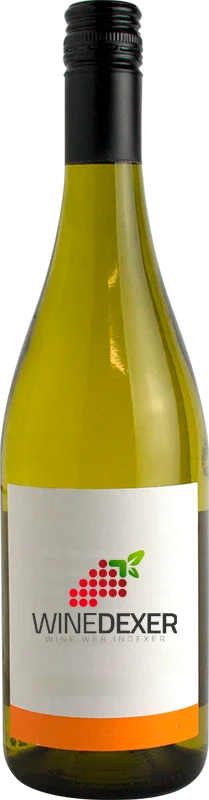
Winery Conti ZeccaSanto Stefano Bianco
 White wine
In the mouth this white wine is a powerful.
This wine generally goes well with vegetarian, appetizers and snacks or shellfish.
Taste structure of the Santo Stefano Bianco from the Winery Conti Zecca
Light | Bold | |
Dry | Sweet | |
Soft | Acidic |
In the mouth the Santo Stefano Bianco of Winery Conti Zecca in the region of Puglia is a powerful.
Food and wine pairings with Santo Stefano Bianco
Pairings that work perfectly with Santo Stefano Bianco



Original food and wine pairings with Santo Stefano Bianco
The Santo Stefano Bianco of Winery Conti Zecca matches generally quite well with dishes of shellfish, vegetarian or appetizers and snacks such as recipes of shrimps with curry and coconut milk, vegan leek and tofu quiche or salted muffins with bacon and grated cheese.
Details and technical informations about Winery Conti Zecca's Santo Stefano Bianco.
Discover the grape variety: Chinuri
Native to Georgia, it has been known for a long time, especially in the Kartli(e) region in the central part of the country, where it is still grown. It has long been appreciated as a table grape. Chinuri can also be found in Germany, Azerbaijan, Russia, Bulgaria, Slovenia, Romania, sometimes in China, and in France, where it is virtually unknown.
Informations about the Winery Conti Zecca
The Winery Conti Zecca is one of of the world's great estates. It offers 85 wines for sale in the of Puglia to come and discover on site or to buy online.

The wine region of Puglia
Puglia (Apulia to many English speakers) is a Long, slender wine region in the extreme Southeast corner of Italy's "boot". To use the shoe analogy often used to illustrate the shape of Italy, Apulia extends from the tip of the heel to the mid-calf, where the spur of the Gargano Peninsula juts out into the Adriatic Sea. The heel (the Salento peninsula) occupies the southern half of the region and is of great importance for the identity of Puglia. Not only are there cultural and geographical differences from Northern Puglia, but the wines are also different.
The word of the wine: Density per hectare
Number of vines per hectare. For the same yield, a vine planted with 3,000 vines per hectare bears many more bunches (per vine) than a vine planted with 10,000. The grapes will therefore be less rich in sugar and polyphenols (tannins, aromas...).