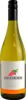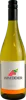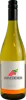
Winery Christophe JolyLa Magnifique Roussette de Savoie
 White wine
This wine generally goes well with
Details and technical informations about Winery Christophe Joly's La Magnifique Roussette de Savoie.
Discover the grape variety: Ignéa
Intraspecific cross between Delizia di Vaprio (46A Pirovano) and Angelo Pirovano ( 2 Pirovano) obtained in Italy by Angelo Pirovano. This variety is registered in the Official Catalogue of table grape varieties, list A1.
Informations about the Winery Christophe Joly
The Winery Christophe Joly is one of of the world's greatest estates. It offers 11 wines for sale in the of Roussette de Savoie to come and discover on site or to buy online.

The wine region of Roussette de Savoie
Roussette de Savoie is an appellation d'origine contrôlée from the Savoie region in the far east of France, specifically for wines made from the Altesse grape. Roussette de Savoie is a richer wine than most other wines produced in Savoie, largely due to the qualities of the Altesse grape, which produces fuller wines than the ubiquitous Jacquère. The wines have strong Floral">floral and honeyed aromas and some stone fruit Character. The appellation's authorized Vineyard lands cover 53 communes in the departments of Savoie and Haute-Savoie - an area shared by the separate Vin de Savoie appellation, which covers a variety of red and white wine styles.
The wine region of Savoie
Savoie is a wine region in eastern France, in the mountainous areas just South of Lake Geneva and on the border with Switzerland. The location and geography of the region has very much defined its Character, which is fragmented, hilly and slightly Swiss. This is evident in the fresh, crisp white wines produced here, as well as in the labels of the region's wines. Many bear a white cross on a red background - the flag of Switzerland and Savoy.
The word of the wine: Performance
Quantity of grapes harvested per hectare. In AOC, the average yield is limited on the proposal of the appellation syndicate, validated by the Inao. The use of high-performance plant material (especially clones) and better control of vine diseases have increased yields. This is not without consequences on the quality of the wines (dilution) and on the state of the market (too much wine). We must not over-simplify: low yields are not synonymous with quality, and it is often in years with generous harvests that we find the greatest vintages (1982 and 1986 in Bordeaux, 1996 in Champagne, 1990 and 2005 in Burgundy...).