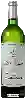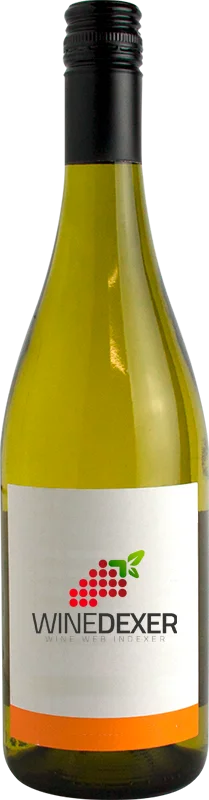
Winery Chevalier de Saint-AndréBordeaux Blanc
 White wine


In the mouth this white wine is a powerful.
This wine generally goes well with pork, vegetarian or poultry.

Taste structure of the Bordeaux Blanc from the Winery Chevalier de Saint-André
Light | Bold | |
Dry | Sweet | |
Soft | Acidic |
In the mouth the Bordeaux Blanc of Winery Chevalier de Saint-André in the region of Bordeaux is a powerful.
Food and wine pairings with Bordeaux Blanc
Pairings that work perfectly with Bordeaux Blanc



Original food and wine pairings with Bordeaux Blanc


The Bordeaux Blanc of Winery Chevalier de Saint-André matches generally quite well with dishes of pork, vegetarian or poultry such as recipes of the garbure, zucchini quiche or quiche lorraine.
Details and technical informations about Winery Chevalier de Saint-André's Bordeaux Blanc.
Discover the grape variety: Cabernet-Mitos
Intensely coloured, structured reds with an almost black ink-dark robe, firm tannins and a dense palate, showing aromas of black fruits (blackberry, blackcurrant), plum, spices, violet and balsamic notes. Teinturier variety (coloured flesh) used primarily in blends to reinforce colour and structure of German reds: Württemberg, Palatinate (Pfalz) and Baden. German hybrid created in 1970 at Weinsberg (blaufränkisch × teinturier-Bouschet).
Informations about the Winery Chevalier de Saint-André
The Winery Chevalier de Saint-André is one of of the world's greatest estates. It offers 5 wines for sale in the of Bordeaux to come and discover on site or to buy online.

The wine region of Bordeaux
World-renowned age-worthy reds, led by round Merlot (plum, black fruit) or firm Cabernet Sauvignon (blackcurrant, cedar, graphite), blended with Cabernet Franc and Petit Verdot for tannic structure. Structured Médoc and Graves, velvety Saint-Émilion and Pomerol. Also crisp dry whites (Sauvignon/Sémillon) and opulent sweet Sauternes with honey and candied fruit. A 110,000 ha Gironde vineyard, 65 appellations, cradle of the 1855 classified growths.
The word of the wine: Tastevin
Metal cup, wide and of low height, being used to mirror and taste the wine. Still used in wine brotherhoods for its emblematic and folkloric character, the tastevin has been replaced by the various tasting glasses.