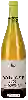
Château Saint-PonsCasteldoc
 wine
wine
This wine generally goes well with
The Casteldoc of the Château Saint-Pons is in the top 0 of wines of Languedoc.
Details and technical informations about Château Saint-Pons's Casteldoc.
Discover the grape variety: Lauzet
Lauzet is a Béarnese grape variety, part of the AOC of Béarn and Jurançon. This variety almost disappeared at the end of the 1980s. At that time, it only occupied a small cultivated area of 1 hectare in all. With the genetic diversity and the multiple plantings that have been carried out, it was able to reach, in 1994, 4 ha. The bunches and berries of Lauzet are all small. As a Pyrenean variety, it has a median lobe. The plant has a fairly early budburst, which takes place one week after Chasselas. As for its maturity, it is of the third period. This variety is fertile and somewhat vigorous, and is slightly susceptible to grey rot. Lauzet produces a wine of average quality. When it is vinified dry, it has adequate acidity. It gives off aromas of fruit and spices. It is often blended with other Pyrenean white grape varieties.
Informations about the Château Saint-Pons
The Château Saint-Pons is one of of the world's greatest estates. It offers 11 wines for sale in the of Languedoc to come and discover on site or to buy online.

The wine region of Languedoc
Languedoc (formerly Coteaux du Languedoc) is a key appellation used in the Languedoc-Roussillon wine region of southern France. It covers Dry table wines of all three colors (red, white and rosé) from the entire region, but leaves Sweet and Sparkling wines to other more specialized appellations. About 75% of all Languedoc wines are red, with the remaining 25% split roughly down the middle between whites and rosés. The appellation covers most of the Languedoc region and almost a third of all the vineyards in France.
The wine region of Languedoc-Roussillon
Languedoc (formerly Coteaux du Languedoc) is a key appellation used in the Languedoc-Roussillon wine region of southern France. It covers Dry table wines of all three colors (red, white and rosé) from the entire region, but leaves Sweet and Sparkling wines to other more specialized appellations. About 75% of all Languedoc wines are red, with the remaining 25% split roughly down the middle between whites and rosés. The appellation covers most of the Languedoc region and almost a third of all the vineyards in France.
The word of the wine: Deep
A rich, complex wine that lingers on the palate and gradually reveals a strong potential for aroma and structure.