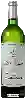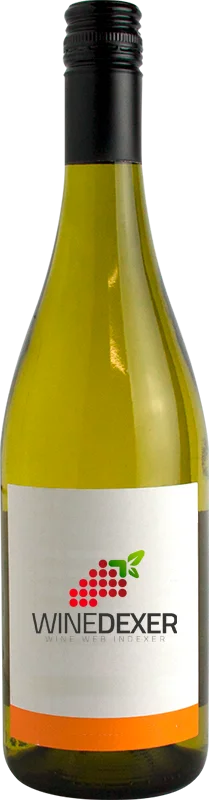
Chateau RollandBordeaux Blanc Sec
 White wine
In the mouth this white wine is a powerful.
This wine generally goes well with pork, vegetarian or poultry.
Taste structure of the Bordeaux Blanc Sec from the Chateau Rolland
Light | Bold | |
Dry | Sweet | |
Soft | Acidic |
In the mouth the Bordeaux Blanc Sec of Chateau Rolland in the region of Bordeaux is a powerful.
Food and wine pairings with Bordeaux Blanc Sec
Pairings that work perfectly with Bordeaux Blanc Sec



Original food and wine pairings with Bordeaux Blanc Sec


The Bordeaux Blanc Sec of Chateau Rolland matches generally quite well with dishes of pork, vegetarian or poultry such as recipes of pasta carbonara almost like the real thing, quiche with bacon and gruyère cheese or turkey blanquette with mushrooms.
Details and technical informations about Chateau Rolland's Bordeaux Blanc Sec.
Discover the grape variety: Siegerrebe
An intraspecific cross between the Madeleine angevine and the Gewurztraminer obtained in 1929 by Georg Scheu at the Alzey testing station (Germany). Almost unknown in France, it can be found in Germany, Denmark, the Netherlands, Belgium, Sweden, Switzerland, England, the United States, Canada, etc.
Informations about the Chateau Rolland
The Chateau Rolland is one of of the world's greatest estates. It offers 3 wines for sale in the of Bordeaux to come and discover on site or to buy online.

The wine region of Bordeaux
Bordeaux, in southwestern France, is one of the most famous, prestigious and prolific wine regions in the world. The majority of Bordeaux wines (nearly 90% of the production Volume) are the Dry, medium and Full-bodied red Bordeaux blends for which it is famous. The finest (and most expensive) are the wines of the great châteaux of Haut-Médoc and the right bank appellations of Saint-Émilion and Pomerol. The former focuses (at the highest level) on Cabernet Sauvignon, the latter on Merlot.
The word of the wine: Oxidative (breeding)
A method of ageing which aims to give the wine certain aromas of evolution (dried fruit, bitter orange, coffee, rancio, etc.) by exposing it to the air; it is then matured either in barrels, demi-muids or unoaked casks, sometimes stored in the open air, or in barrels exposed to the sun and to temperature variations. This type of maturation characterizes certain natural sweet wines, ports and other liqueur wines.