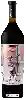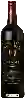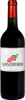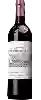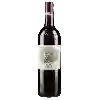
Château Peychot La ForêtBordeaux supérieur
 Red wine



In the mouth this red wine is a powerful with a nice balance between acidity and tannins.
This wine generally goes well with poultry, beef or veal.
Taste structure of the Bordeaux supérieur from the Château Peychot La Forêt
Light | Bold | |
Smooth | Tannic | |
Dry | Sweet | |
Soft | Acidic |
In the mouth the Bordeaux supérieur of Château Peychot La Forêt in the region of Bordeaux is a powerful with a nice balance between acidity and tannins.
Food and wine pairings with Bordeaux supérieur
Pairings that work perfectly with Bordeaux supérieur



Original food and wine pairings with Bordeaux supérieur

The Bordeaux supérieur of Château Peychot La Forêt matches generally quite well with dishes of beef, veal or game (deer, venison) such as recipes of marinated shrimp skewers with garlic, veal tagine with carrots or duck with olives.
Details and technical informations about Château Peychot La Forêt's Bordeaux supérieur.
Discover the grape variety: Koshu
One of the oldest varieties cultivated in Japan, generally in arbors/pergolas, most often used as a table grape and recently vinified and associated with other varieties. It is a Vitis vinifera also known in Australia, New Zealand, Germany, the United States... practically unknown in France.
Informations about the Château Peychot La Forêt
The Château Peychot La Forêt is one of of the world's greatest estates. It offers 3 wines for sale in the of Bordeaux to come and discover on site or to buy online.

The wine region of Bordeaux
Bordeaux, in southwestern France, is one of the most famous, prestigious and prolific wine regions in the world. The majority of Bordeaux wines (nearly 90% of the production Volume) are the Dry, medium and Full-bodied red Bordeaux blends for which it is famous. The finest (and most expensive) are the wines of the great châteaux of Haut-Médoc and the right bank appellations of Saint-Émilion and Pomerol. The former focuses (at the highest level) on Cabernet Sauvignon, the latter on Merlot.
The word of the wine: Primeur (wine)
A wine made to be drunk very young, bottled and marketed very soon after fermentation (about two months). Syn.: new.