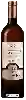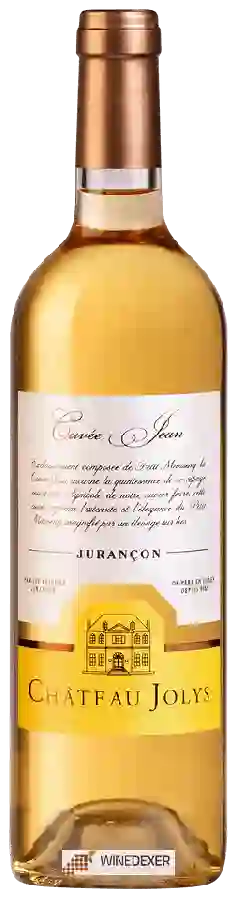
Château JolysCuvée Jean Jurançon
 Sweet wine


This wine generally goes well with
The Cuvée Jean Jurançon of the Château Jolys is in the top 100 of wines of Jurançon.

Wine flavors and olphactive analysis






On the nose the Cuvée Jean Jurançon of Château Jolys in the region of South West often reveals types of flavors of pineapple, cream or citrus and sometimes also flavors of apples, quince or peach.
Details and technical informations about Château Jolys's Cuvée Jean Jurançon.
Discover the grape variety: Petit Manseng
Exceptional sweet wines obtained by on-vine drying, with an unctuous mouth balanced by cutting acidity, featuring intense aromas of candied pineapple, mango, candied citrus, dried apricot, honey, dried fruits and sweet spice notes. Very high ageing potential. Star of Jurançon moelleux AOC and Pacherenc du Vic-Bilh AOC, also made as ambitious dry wines. Very late-ripening native grape of Béarn (South-West France).
Last vintages of this wine

The best vintages of Cuvée Jean Jurançon from Château Jolys are 2017, 2016, 2013, 2011 and 2014.
Informations about the Château Jolys
The Château Jolys is one of of the world's greatest estates. It offers 22 wines for sale in the of Jurançon to come and discover on site or to buy online.

The wine region of Jurançon
Béarn jewel of whites at the foot of the Pyrenees: signature Petit Manseng as king white for sweet wines (on-vine raisining) — opulent and fresh with notes of honey, candied pineapple, mango, apricot, white flowers, cinnamon, nutmeg and a truffle touch, signature chiseled acidity balancing sugar. Gros Manseng as dry, lively and taut (citrus, exotic fruits, flowers). Courbu and Lauzet as complement. AOC (1936), ~1,000 ha on 25 communes south of Pau, clay-gravel terraces.
The wine region of South West
French mosaic of strong identities south of Bordeaux. Cahors and its Malbec ("black wine"): deep reds with notes of blackberry, plum, violet, tobacco and cocoa, firm tannins. Madiran and its dense, age-worthy Tannat. Jurançon whites: golden sweet (apricot, honey, pineapple) and lively dry from Petit Manseng.
The word of the wine: Late harvest
A name historically used in Alsace, late harvest refers to grapes harvested during over-ripening for the production of sweet and syrupy wines.