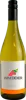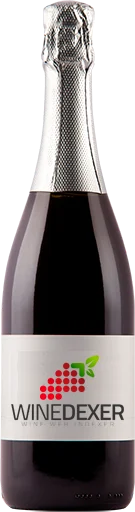
Caves du Val de FranceCuvée Pauline Vouvray
 Sparkling wine


This wine generally goes well with
The Cuvée Pauline Vouvray of the Caves du Val de France is in the top 80 of wines of Vouvray.
Details and technical informations about Caves du Val de France's Cuvée Pauline Vouvray.
Discover the grape variety: Pineau d'Aunis
The wines produced in the Vendôme region are of excellent quality thanks to an exceptional grape variety: pineau d'aunis. For example, the red wines of the region, with their aromas of ripe red fruit and sweet spices, are a blend of Pineau d'Aunis, Cabernet Franc and Pinot Noir. The Vendôme hillsides are less than 200 km southwest of Paris. Pineau d'Aunis, a vigorous black grape variety, was first cultivated in the 9th century. It is characterized by a late budburst. Moreover, its foliage partially reddens in autumn. Although it is difficult to grow, Pineau d'Aunis is a high-yielding grape variety, producing between 40 and 80 hectolitres per hectare. It produces a wine with low alcohol content, supple, light-coloured and very aromatic. The "Pineau d'Aunis" grape variety is used as a single variety for the production of Coteaux du Vendômois. On the other hand, it is used in blends for Anjou, Rosé d'Anjou, Crémant de vallée de la Loire, Rosé de vallée de la Loire, Saumur, Saumur Champigny, Coteaux du Loir and Touraine. Finally, it is an accessory grape variety for Valençay.
Informations about the Caves du Val de France
The Caves du Val de France is one of of the world's greatest estates. It offers 6 wines for sale in the of Vouvray to come and discover on site or to buy online.

The wine region of Vouvray
Vouvray is the most famous and most respected appellation of the Loire Valley's Touraine growing region. The title covers white wines of various styles (sweet wine, dry, still and sparkling), from eight villages around the medieval town of Vouvray, on the northern banks of the Loire river. Vouvray is the flagship wine of the Chenin Blanc grape (or Pineau de la Loire as it is known there), followed ever-closer by Savennieres and the sweet whites of Anjou. Few wine regions in the world use Chenin to the same extent.
The wine region of Loire Valley
The Loire Valley is a key wine region in western France. It follows the course of the Loire River on its Long journey through the heart of France, from the inland hills of the Auvergne to the plains of the French Atlantic coast near Nantes (Muscadet country). Important in terms of quantity and quality, the region produces large quantities (about 4 million h/l each year) of everyday wines, as well as some of France's greatest wines. Diversity is another of the region's major assets; the styles of wine produced here range from the light, tangy Muscadet to the Sweet, honeyed Bonnezeaux, the Sparkling whites of Vouvray and the juicy, Tannic reds of Chinon and Saumur.
The word of the wine: Deposit
Solid particles that can naturally coat the bottom of a bottle of wine. It is rather a guarantee that the wine has not been mistreated: in fact, to avoid the natural deposit, rather violent processes of filtration or cold passage (- 7 or - 8 °C) are used in order to precipitate the tartar (the small white crystals that some people confuse with crystallized sugar: just taste to dissuade you from it)