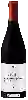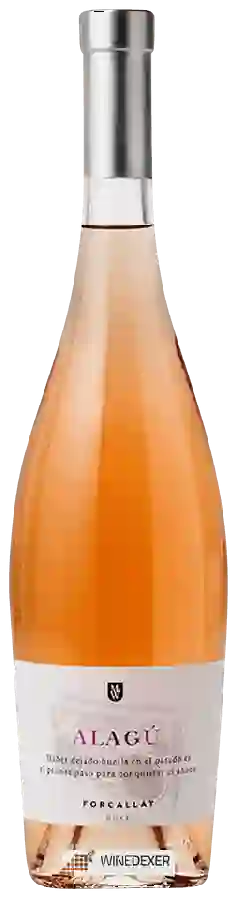
Winery Casa CorredorAlagú Forcallat Rosé
 Pink wine



This wine generally goes well with

Details and technical informations about Winery Casa Corredor's Alagú Forcallat Rosé.
Discover the grape variety: Rousse
Light, fruity reds with a pale ruby robe, soft tannins, and an airy palate with moderate acidity, offering understated red-fruit aromas. A discreet, rustic southern profile. Nearly extinct, preserved in INRAE varietal collections, it testifies to the pre-phylloxera ampelographic diversity of the southern French vineyard.
Last vintages of this wine
The best vintages of Alagú Forcallat Rosé from Winery Casa Corredor are 0, 2016
Informations about the Winery Casa Corredor
The Winery Casa Corredor is one of of the world's greatest estates. It offers 13 wines for sale in the of Alicante to come and discover on site or to buy online.

The wine region of Alicante
DOP of the southeast of Valencia, land of Monastrell (Mourvedre) under Mediterranean sun. Dense, sun-soaked reds with signature notes of blackberry, candied plum, garrigue, leather, cocoa and sweet spices, firm tannins and a warm palate. A mythical jewel: Fondillon, a naturally sweet wine from Monastrell raisined on the vine, solera-aged >=8 years, 16-18% alcohol, only ~10 cellars (Vinalopo). Also Muscat of Alexandria as a floral sweet wine (orange blossom, honey).
The wine region of Murcie
Wine region of southeastern Spain on sunny high plateaus, 3 DOs fanning out: Jumilla, Yecla, Bullas. Monastrell (Mourvedre) reigns in red (~80% of the vineyard): dense and sunny with signature notes of black mulberry, candied black cherry, garrigue, leather, liquorice and a sweet spice touch, firm tannins and a warm palate — pomegranate robe, sustained alcohol, often own-rooted. Round Grenache, supple Tempranillo, peppery Syrah. Southern wines with outstanding value.
The word of the wine: Breton
See cabernet franc.